Over 6,000 kilometres of interconnected routes, the ancient and modern Silk Roads have connected the Far East with Europe since the second century. The Silk Road was the first network in the global supply chain, facilitating the movement of goods, people, and ideas. The predominant reason for its enduring presence is its ability to withstand shocks, disruptions, and precarity. The Silk Road remains a resilient corridor despite geopolitical and geographic challenges.
In this article, we look at how the ancient Silk Road practiced supply chain resilience, and how modern logistics adopts it to maintain robust and secure corridors. Furthermore, we look at how the ancient Silk Road’s contemporary avatar, the multi-billion-dollar Belt and Road Initiative (BRI), reconsiders resilience.
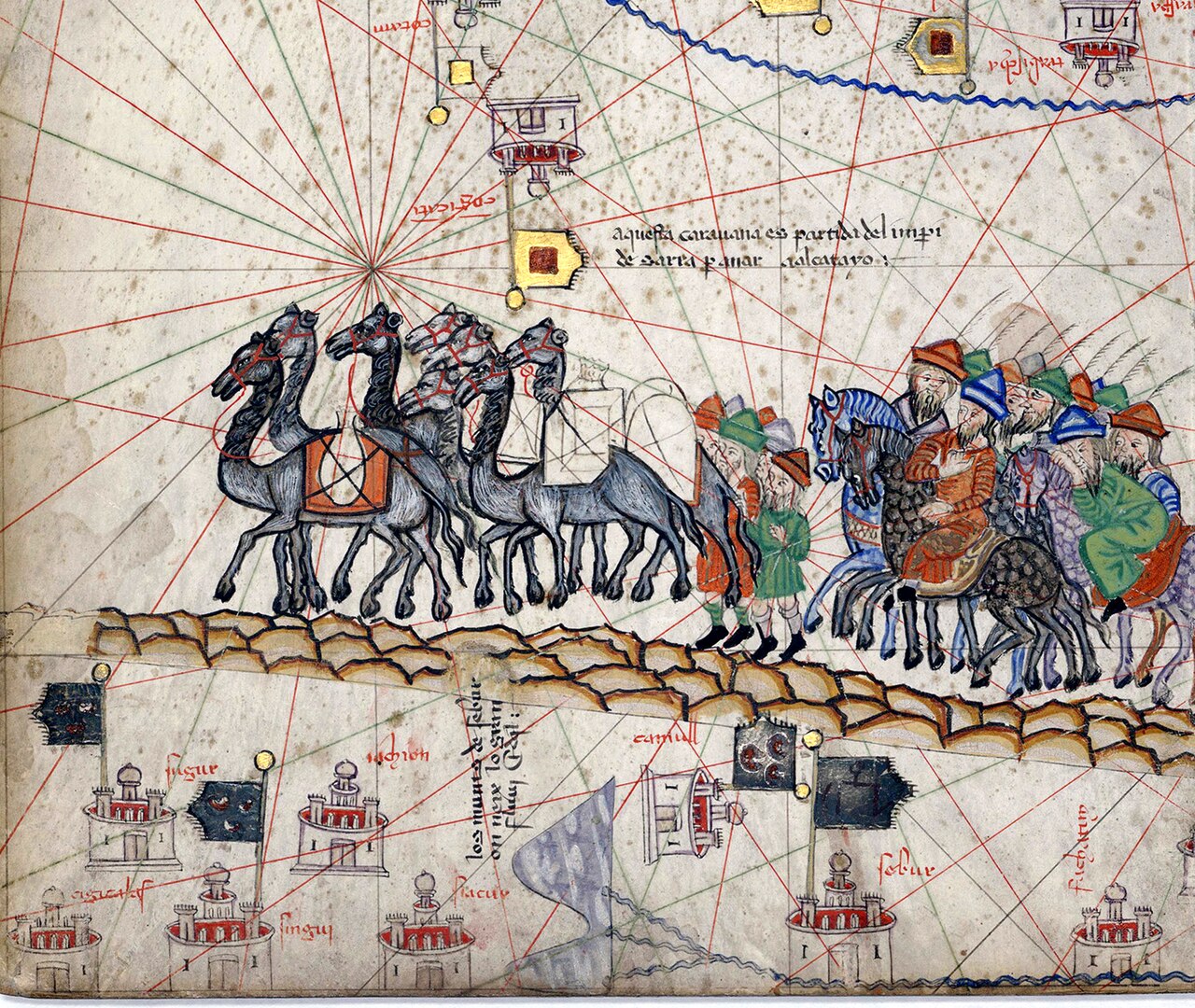
(Depiction of Marco Polo's Caravan from the 13th Century)
More than a Single Road
While the name Silk Road suggests that it was a single path transporting a single commodity, that is, silk, the reality of this historical route was much more complex. The Silk Road was a complex web of overland and marine routes that connected the Far East to the West. The overland routes traditionally originated in Xi’an, going along the Great Wall of China, then traversing the Taklamakan Desert in northwest China, and the gargantuan Pamir Mountains, into Afghanistan and the Levant before crossing the Mediterranean Sea. Throughout the routes, trade hubs such as Samarkand, Bukhara, and Kashgar emerged and thrived as large oasis cities. Along with land routes, maritime routes connected port cities in China to trading cities in Southeast Asia, most notably in Indonesia, and extended to ports in South Asia, West Asia, and East Africa.
While silk was an obvious commodity traded on the Silk Road, the route also carried a variety of other goods. From East to West, silk, gunpowder, paper, porcelain, agar, rice, perfume, medicines, and tea moved. From West to East, merchants brought back horses, grapes, woollen goods, carpets, precious metals, and glass. There were also regional specialities: for example, Northern Europe traded in furs, honey, and amber; India exported fabrics and spices; and Iran was known for silver.
Resilience on the Road
Owing to the many challenges, merchants on the Silk Road crafted solutions so as to remain highly adaptable. To tackle climate-related shifts that made certain routes impractical, larger networks of routes were developed, and news about these was shared throughout the trade hubs. An interesting phenomenon was the creation of caravanserais. These essentially functioned as smaller trading setups, guesthouses, inns, and hostels, with merchants and their goods. They also became a space of exchange, not just of goods but also of information. Another provision of these caravanserais was security; guards protected the merchants and their goods from bandits, thieves, and other criminals. This protective quality is also reflected in the architecture of these caravanserais, which were built solidly like forts. These caravanserais were spaced at regular intervals (roughly 30-40 km) so that merchants were never completely exposed to the dangers of the journey.
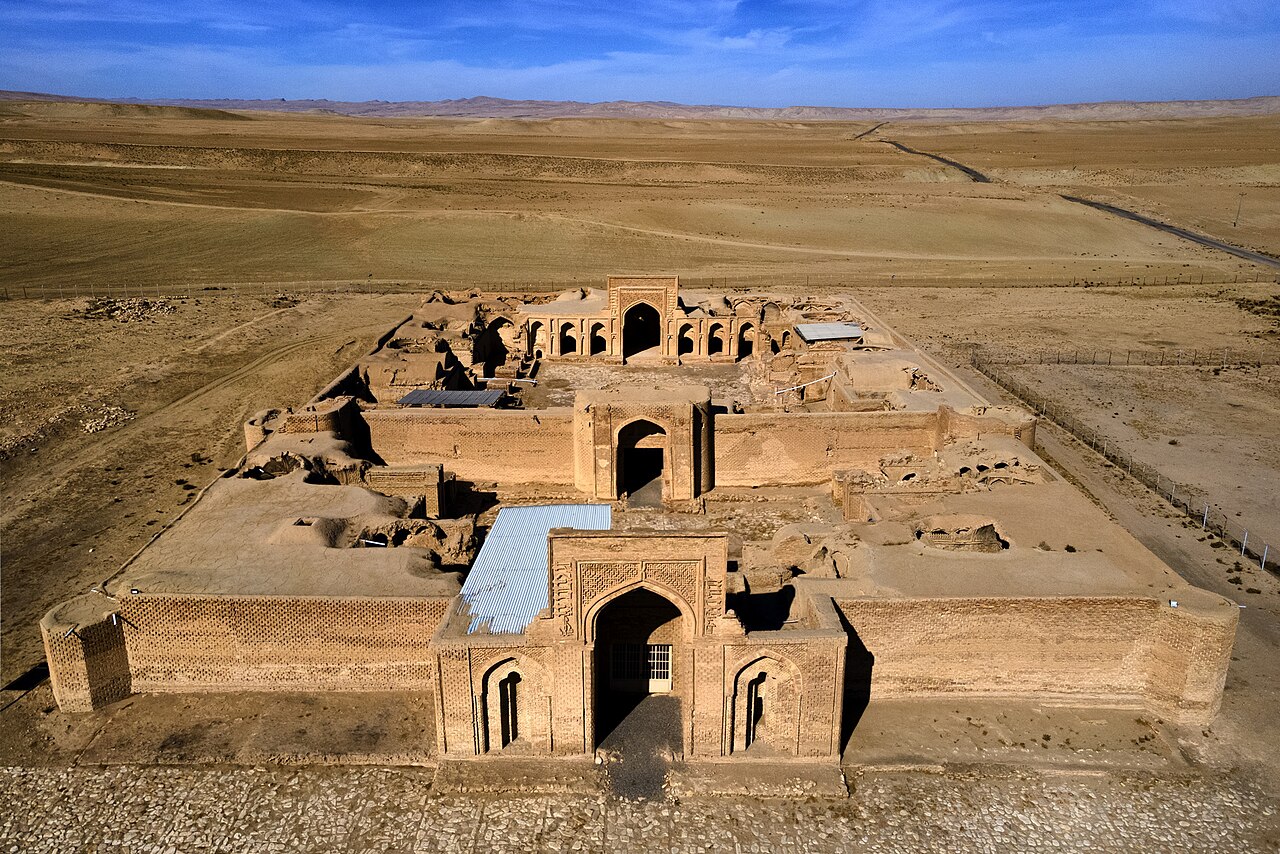
(Ribat-i Sharaf, the 12th Century Caravanserai in Iran)
There were two crucial gifts that the Silk Road bestowed upon the modern world: the standardization of economic markers and the creation of mercantile networks. By facilitating monetary policy and calibrating weights and measures, friction in cross-border trade was drastically reduced. This was achieved through mercantile networks working closely with governing entities. Mercantile networks also reduced risk by entering into shared liability agreements or rudimentary forms of insurance.
How the Belt and Road Seeks Resilience
Like its ancient counterpart, the BRI employs a dual-corridor strategy, moving goods both overland and via the 21st-century Maritime Silk Road. Moreover, while disruptions and chokepoints in the Suez Canal affect routes, BRI countries have rapidly developed overland routes such as the Eurasian Land Bridge and the China-Pakistan Economic Corridor (CPEC). On the other hand, when rail freight over the Eurasian Land Bridge also exhibited increased traffic and disruption, multimodal transport became prevalent. On a tech front, BRI has pushed for the integration of technologies like 5G, AI, blockchain, and satellite navigation, or a unified “tech stack”, in the global supply chains. This allows a shift from traditional infrastructure and brings more remote regions into the global supply chain; a standout example of this has been Kazakhstan where that has been the largest recipient of BRI (including the Digital Silk Road) investments in 2025 have, thus maintaining its criticality to the contemporary Silk Road.
To adapt to the current challenges, such as underdeveloped infrastructure, precarious cross-border movements, and shifting geopolitical tensions, BRI tends towards a different philosophy: “Small is Beautiful”. The project's intention is to undertake smaller, agile endeavours to fill gaps left by larger billion-dollar projects. This includes improving connectivity between hubs, investing in technologies, and maintaining and upgrading existing infrastructure to handle larger trade volumes. BRI also maintains stability by adopting a neutral stance in geopolitical conflicts and focusing on financial investments instead. An example of this was seen recently, when many Chinese vessels were granted safe access through the Strait of Hormuz, while many others were barred from entering.
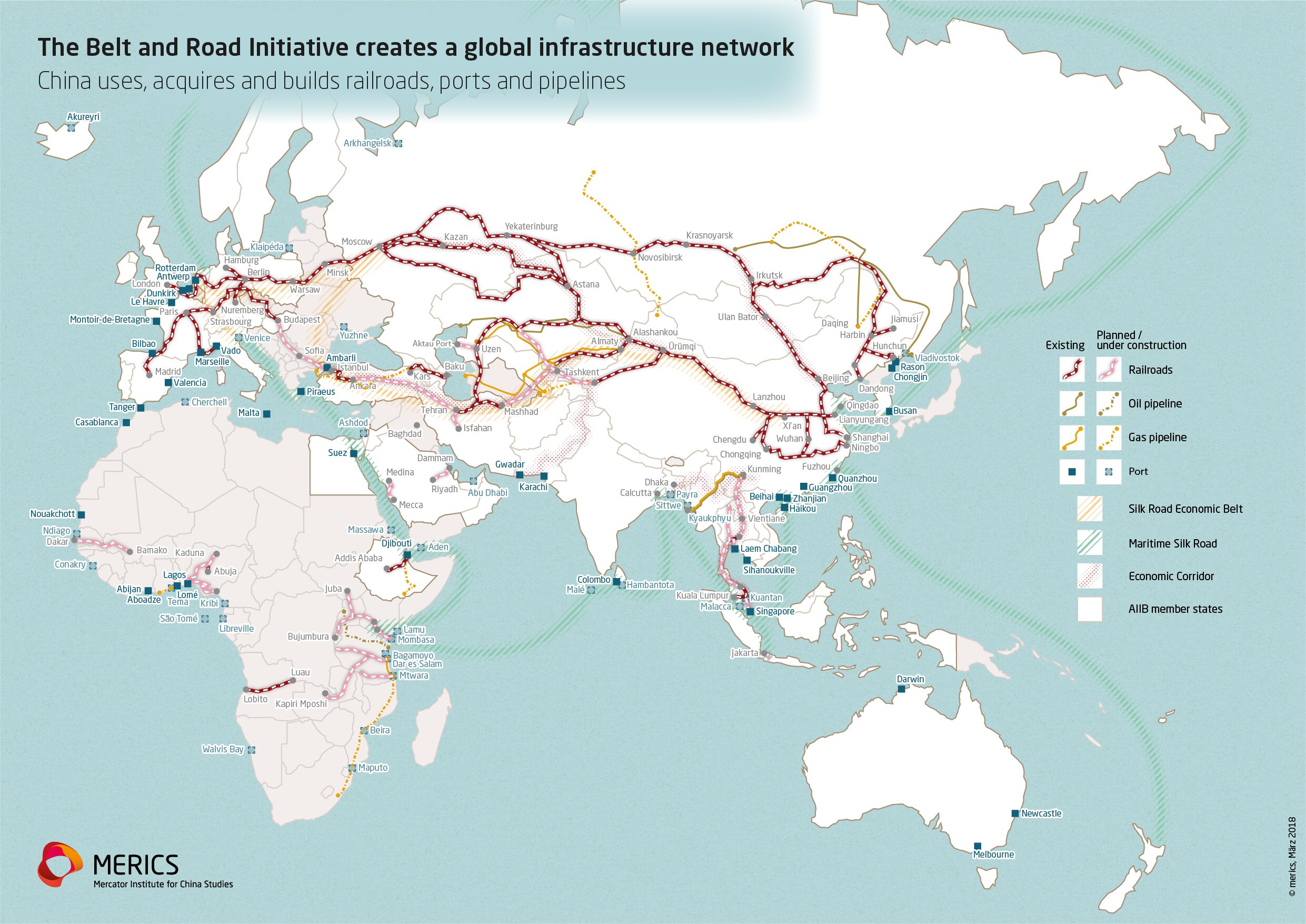
(Various BRI projects, routes and hubs. Picture courtsey Merics)
BRI is also creating focus on “anchor countries”, which are selected stable countries such as nations of Southeast Asia, that are considered stable trading centers. Furthermore, the aim of BRI was to develop a host of emerging trade partners, rather than relying on large economies like the US. Strategic alliances and trade deals signed between European and Asian countries enabled market diversification and expanded sources of commodity procurement. Finally, the fundamental goal of the ancient Silk Road and the contemporary BRI continue to be global connectivity and the linking of economic centres: East Asia, the Middle East, Europe, and Africa.

.svg)
.svg)


