Rooted in Bremerhaven, Germany, for over four decades, GCD Glomb, a member of the New Silk Road Network, is a family-run enterprise with immense experience in container transport and is a recognized specialist in Europe-wide trucking and intermodal operations. The company’s hands-on approach, long-term partnerships, and a pragmatic focus on organic growth have enabled it to build deep experiential knowledge in key European hubs such as Hamburg, Duisburg, and Małaszewicze. To tackle the growing challenges of supply chain risks, GCD Glomb balances an asset-light strategy coupled with reliable capacity, enabling it to easily manoeuvre and grow into a resilient organization.
In our interview, Julius Glomb, Transport Manager at GCD Glomb, reflects on the family legacy, the company’s journey, its capabilities, and its strategies. He also shares about the company’s eye-catching branding and what it means to support local communities.
In conversation with Julius...
NSRN: GCD Glomb has over 40 years of experience in container transport, with over 500 trucks in its fleet and various kinds of chassis, how did the company acquire such growth over the years? We understand that Glomb is a family-run business. We would like to learn more about Glomb’s origin story, its early days, its foundations in Bremerhaven, and the values that shaped the company, which are also reflected in day-to-day business.
Julius: Glomb was founded over 45 years ago in Bremerhaven and has remained a family-managed enterprise since day one. The company’s growth has always been rooted in clear core values: reliability, entrepreneurial thinking, and close relationships with both customers and employees. Even as we expanded, we maintained a hands-on, approachable leadership culture. From the beginning, we deliberately built a broad and diversified customer base rather than relying on a few large accounts. This ensured stability and allowed us to grow sustainably.
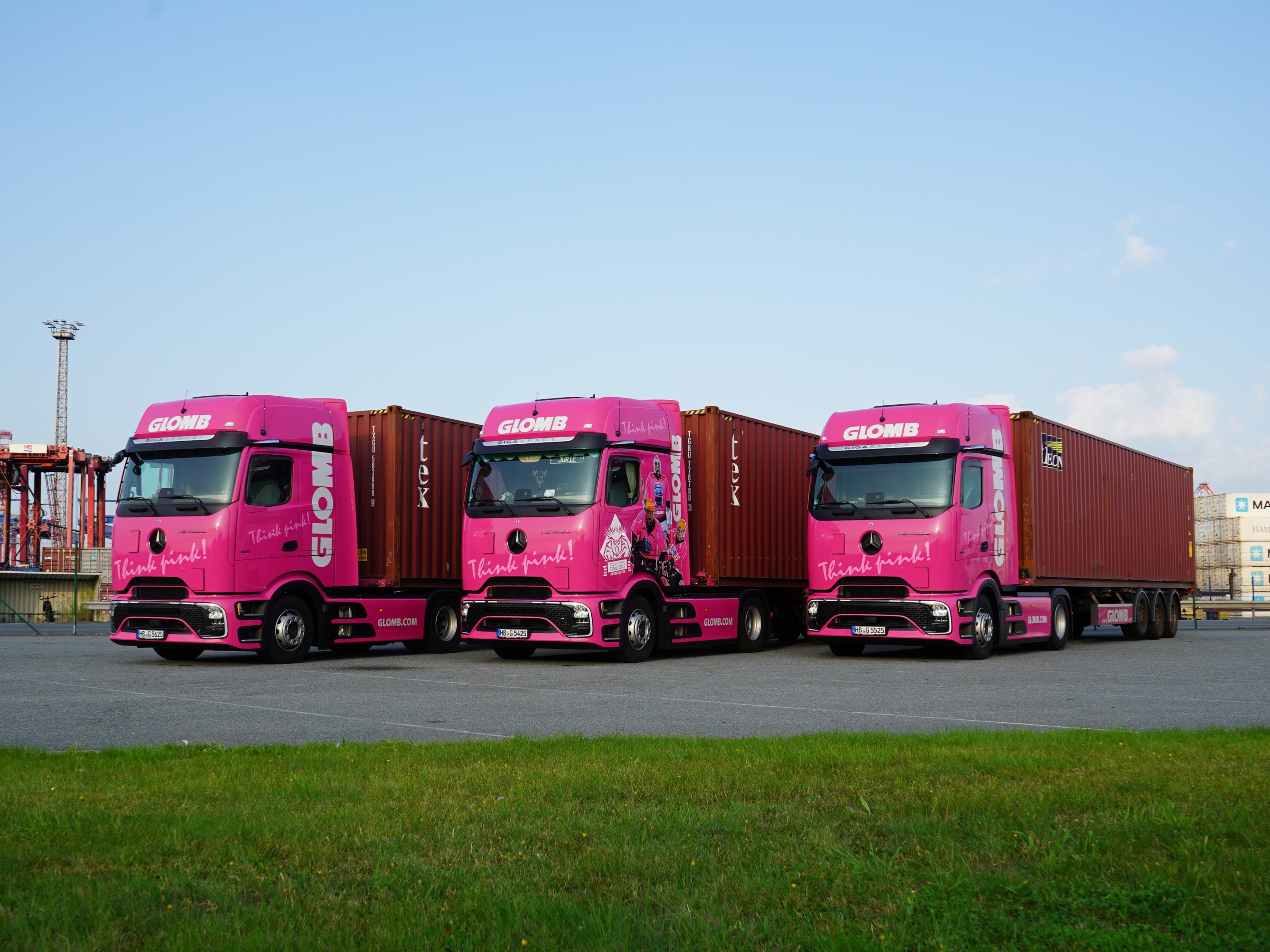
(GCD Glomb's Distinct Fleet of Pink Trucks)
Our objective has always been to offer customers a comprehensive logistics solution on the road, which is why we operate a highly versatile fleet with a range of chassis types to meet diverse transport requirements. Although container trucking with its own fleet is typically an asset-heavy business model, our strategy has consistently been to keep it asset-light. Only about one-third of the 500 trucks we dispatch are our own vehicles. The remaining capacity is operated through long-standing subcontractor partnerships. This structure provides maximum geographic coverage and the flexibility to adjust to fluctuations in economic demand. All this growth has been fully organic, developed completely from within, and without acquisitions.
NSRN: GCD Glomb offers Europe-wide trucking to and from all major ports and hubs across Europe. With the geopolitical tensions and slowdown of rail freight on the Belt and Road, what impacts did Glomb witness, especially at the rail hubs in Malaszewicz and Duisburg? Plus, how do your relationships with terminals, rail operators, and depots contribute to the smooth operations of your services?
Julius: Geopolitical tensions and the slowdown along the Belt and Road corridor have clearly affected rail volumes, particularly at hubs such as Małaszewicze and Duisburg. We have seen volume shifts, route adjustments, and greater volatility in planning reliability. However, our diversified European trucking network enabled us to respond flexibly. Road transport often became the stabilizing mode when rail capacity fluctuated.
We have always strived to adapt quickly to changing trade flows. In daily operations, it must not matter whether containers are picked up in Rotterdam, Antwerp, Bremerhaven, Hamburg, or now increasingly from growing European hubs such as Gdańsk or Genoa. With our flexible, predominantly “rolling” asset structure, we can adjust capacity and routing accordingly. This means that all vehicles are equipped with full access credentials to North and West European ports. For example, after unloading an import container in Southern Germany, it must not matter whether the next export moves via Wilhelmshaven, Bremerhaven, Hamburg, Rotterdam, Antwerp, Zeebrugge, or even Genoa or Trieste.
This flexibility prevents structural dependency on specific ports. Supported by our large fleet and a comparatively lean fixed-cost structure, we can quickly adjust capacity to market fluctuations. Subcontractors often pioneer new routes, and once stable volumes develop, our own pink trucks are gradually deployed on those routes.
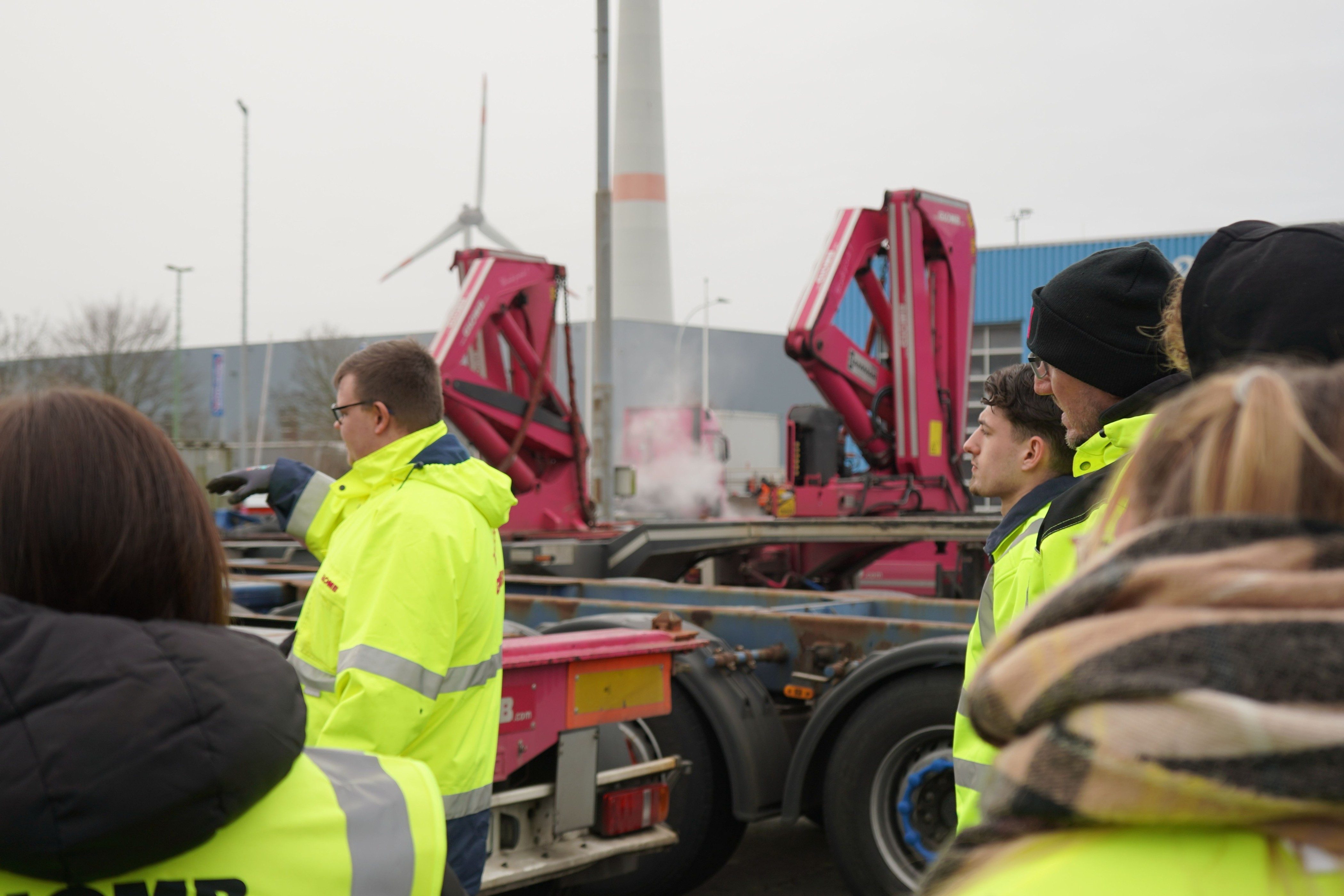
(GCD Glomb's Team at work. Picture Credit: GCD Glomb)
However, a greater challenge arises from the imbalance between import and export flows, especially during periods of weak European export demand. Under such market conditions, equipment positioning and capacity management require even more precise coordination. We mitigate imbalances through geographic diversification, enabling us to serve a broad range of destinations rather than relying on specific directional flows. In addition, we use triangulated traffic models, allowing trucks to be repositioned across corridors rather than requiring a direct export return on the same route. Further optimization remains part of the experienced truck operator’s expertise.
NSRN: Your company also has strong capabilities in customs clearance in Germany, Poland, and the Czech Republic, as your offers include import/export clearance and transit customs clearance. How critical is the “one-stop” approach for your customers?
Julius: The one-stop approach is highly critical for our customers. International container transport is complex, and combining trucking with in-house customs clearance significantly reduces interfaces, delays, and communication gaps. However, within the broader global container logistics chain, our role is clearly defined: we are a specialized road transport provider. Our business model is therefore not a “full-scope” one-stop shop covering the entire supply chain. Instead, our objective is to add tangible value around our core trucking service. Customs clearance is one important element of this approach, one of several complementary services through which we enhance efficiency and reduce coordination effort for our customers.
NSRN: What are some special requirements that Glomb utilizes to handle a wide range of goods, including high-value or dangerous goods? How do you ensure compliance and security while also keeping competitive transit times?
Julius: Meeting special logistical requirements starts with the quality of personnel. Handling specialized trailers and sensitive goods can be fully controlled only if the professionals responsible have been trained within our organization. By developing and training drivers and operational staff from the beginning and directly on our specific equipment, we ensure they understand both the technical requirements and the compliance standards for high-value or dangerous cargo.

(Julius Glomb. Picture Credit: GCD Glomb)
Our strong emphasis on in-house training is built on Germany’s dual vocational education system for both commercial staff and professional drivers. Compared to our overall workforce, we maintain a high proportion of trainees, ensuring the systematic development of the next generation. While recruiting has become more challenging across Europe, we are actively investing in increasing the profession's attractiveness to younger candidates, with encouraging results so far. Our approach goes beyond standard recruitment and functions as an independent training ecosystem. It includes partnerships with driving schools, integration and qualification of career changers, and cooperation with public employment agencies. The strategic focus is on long-term retention, supported by a strong employer brand and a fair, competitive compensation structure.
This allows us to systematically prepare them for future operational demands. Furthermore, we rely on full digital transparency through real-time fleet tracking and the expertise of our multilingual dispatch teams.
NSRN: Glomb’s “Think Pink” and its brightly coloured trucks leave a lasting impression on anyone who comes across it. Apart from the ability to stand out, what inspired the company adopt such a bold taste in its branding? Moreover, as a Bremerhaven-based company, we understand that Glomb often takes an interest in contributing to the city’s events, such as organizing the Glomb Bremerhaven Marathon. How did this initiative come about? And what other community-building initiatives does Glomb undertake?
Julius: The origin of our pink branding was operational rather than marketing-driven. Before multi-chassis systems became standard, drivers often had to switch chassis after transporting a 40’ container in order to move a 20’ container. It was tempting, from an economic standpoint, to temporarily use another company’s chassis to save time and reduce costs. Since most chassis were visually similar, one’s equipment could go unnoticed. Weekends were spent searching for ports in Bremerhaven, Bremen, or Hamburg to relocate our equipment before restarting operations on Monday. To prevent this laborious search, we painted our chassis bright pink. The logic was simple: no one would actively “borrow” a pink chassis, so we would not lose them. Over time, the first pink truck followed. Later, a Japanese customer suggested extending the pink colour to marketing materials, as pink holds profound cultural significance in Japan. From there, the branding developed naturally, and the rest is history.
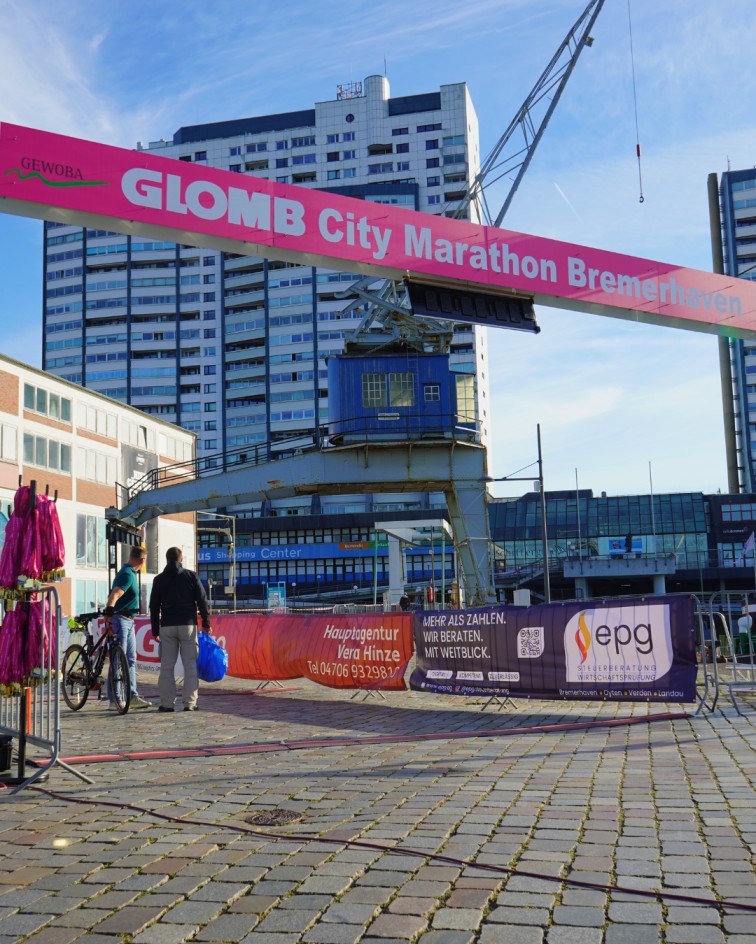
(GCD Glomb Supports the Bremerhaven City Marathon. Picture Credit: GCD Glomb)
Social initiatives are an integral part of our understanding of sustainability. As a third-generation family business, we define sustainability holistically, aligning economic performance with ecological responsibility and social commitment. The Glomb Bremerhaven Marathon, alongside our long-standing engagement with the Fischtown Pinguins Bremerhaven, was established as a way to actively support our local community and create a platform that brings people together. For us, sustainable entrepreneurship means contributing to long-term stability not only for our company, but also for our employees, partners, and the society in which we operate. This is the idea behind our guiding principle, “Pink is the better green.

.svg)
.svg)


