Last year, over 6.2 million trucks were circulating within the European Union (EU) borders, transporting over 13.1 billion tonnes of cargo. The industry generates about €6 billion annually for the EU. Road freight in the EU is one of the world's most sophisticated and integrated transportation systems, moving about 75% of all goods within this bloc. These numbers prove that the industry functions as the backbone of the European economy, serving as a circulatory system that connects manufacturers, markets, ports, distribution centers, and, most importantly, the 27 member states.
However, the last five to six years have seen unprecedented change in the European road freight sector, marked by regulatory overhauls, a chronic driver shortage, a volatile economic landscape, and geopolitical tensions in neighboring regions. This article discusses how the trucking industry, the cornerstone of the European economy, is navigating a future characterized by uncertainty and “rolling” past the hurdles.
Regulatory Changes and the European Union
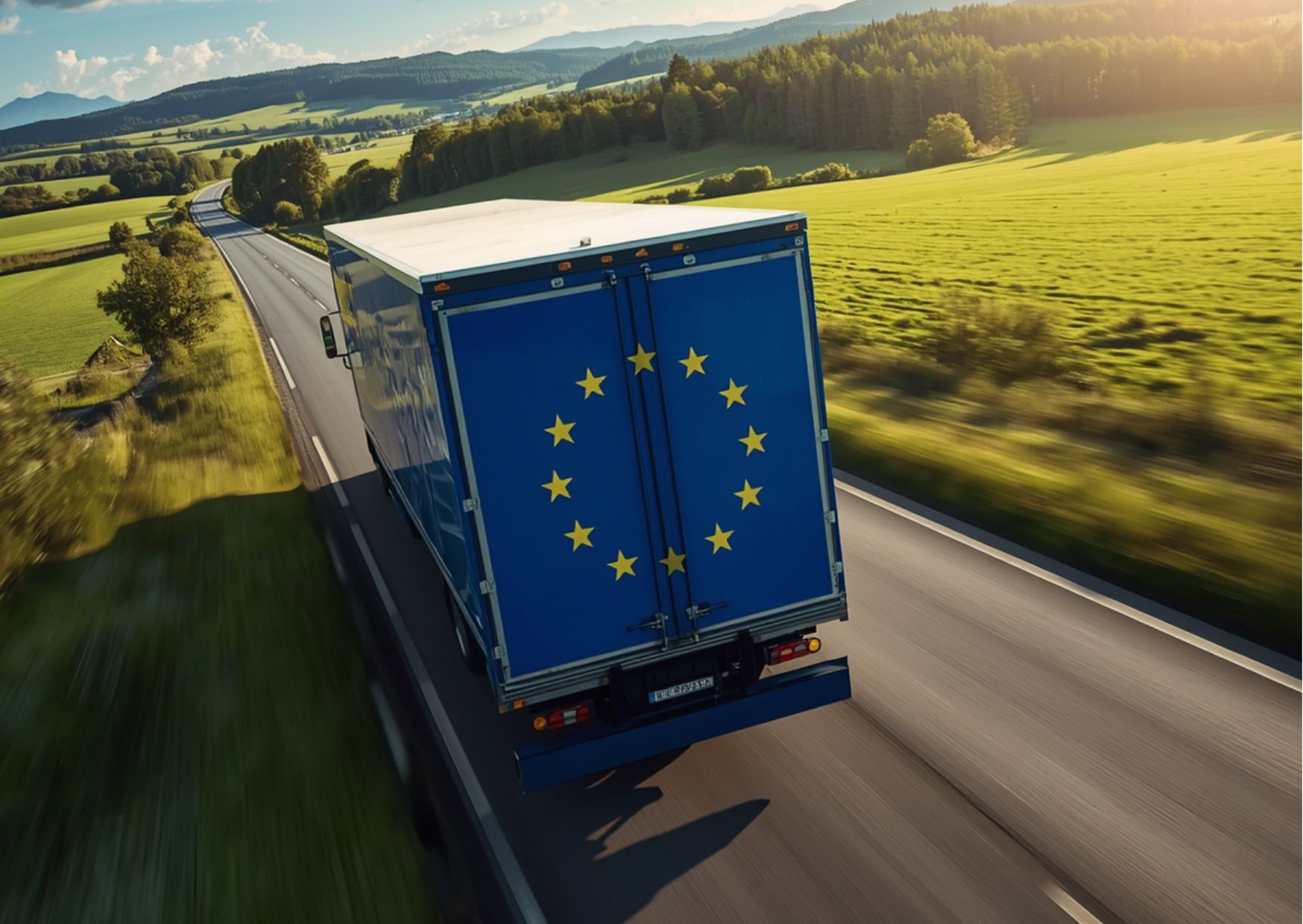
In 2020, the year the world weathered the shocks of a global pandemic, the EU launched its first comprehensive set of regulations and initiatives, known as the EU Mobility Package, designed to develop and modernize the European road transport industry. These regulations included a variety of directives towards driver postings/mobility, cabotage, and the use of digital tools. The adoption of the Mobility Package occurred in several distinct phases.
(Stock Image)
In the first phase, driving and rest times were tackled. Drivers were now to be allotted suitable accommodation for rest outside their vehicles, and schedules were to be designed to allow drivers to return to their home base every four weeks. Tachograph recordings were also implemented, and moreover, a Safe and Secure Truck Parking Area (SSTPA) was developed to reduce cargo theft and thus relieve drivers of stress and fatigue. In the second phase, posted drivers were to be paid the host country’s minimum wage for certain border operations, and cabotage restrictions were introduced, which included a mandatory four-day “cooling-off” period. The third and fourth phases predominantly focused on retrofitting second-generation smart tachographs in all heavy-duty vehicles and complying with rest time regulations for all EU drivers.
While the intention of the Mobility Package was to create a safer and fairer market, its implementation was not without challenges. Operational and environmental frictions also increased because the four-week rule and cabotage limitations led to empty runs and contract cancellations to avoid fines. Several Eastern European countries could not utilize the “per diem” tax-free allowances, increasing costs for some trucking companies by up to 30%. Since wages were also taxed, many drivers did not feel any better off financially, especially when working abroad, leading drivers to prefer staying in their home countries. These impacts compounded into an already ongoing struggle of driver shortages around the continent.
Driver Shortage Crisis
Apart from the effects of the EU mobility package on the driver shortage crisis, the industry collectively agrees that the reduction of driver numbers will remain a chronic issue. As of 2026, the EU, UK, and Norway collectively lack over 233,000 drivers, and as one-third of the driver population is over 55, retirements will outnumber recruitment in the years to come. An aging workforce will create challenges for the industry, along with high barrier to entry for the profession. Since driving is often associated with long hours and poor working conditions, many young people, especially women, find the prospect unappealing.

(Queued Trucks)
Another reason for the shortage has been the Russia-Ukraine war, which has removed over 166,000 drivers from the market. Ukrainian drivers returned home as the war started, while visas and entry permissions for Russian and Belarusian drivers were not extended. This loss of labor particularly affected the Polish road freight sector, where around 30% of the drivers were from outside the EU, coming from Ukraine and Belarus. Furthermore, the labor shortage affected the industry, which was already struggling with the post-pandemic surge in demand. While a depleting workforce and regulatory frameworks have continuous repercussions, the most immediate challenges this year have resulted from fuel surges.
Fuel Spikes on the Road
Since March 2026, fuel prices in the EU have become a dominant and highly volatile factor burdening the EU road freight industry. The attacks on energy infrastructure and geopolitical instability in the Middle East have surged diesel prices by 31% since the conflict began. Prices will increase by another 10% by the beginning of June, analysts report.
Since fuel accounts for a significant share of operating costs for trucking companies, and most operate on razor-thin margins, absorbing shocks from sudden spikes is challenging. Fuel surcharges also lag, moving only weekly or monthly, which causes truckers to serve as the buffer, absorbing shocks between clients and markets. In the EU, most trucking companies fall under the SME category, meaning their cash reserves and purchasing leverage are generally limited, and when fuel prices spike, these companies are affected, especially when tackling a poorly priced contract. EU member states have consistently implemented emergency measures, including price caps, VAT relief, and fuel-efficiency frameworks. Nevertheless, concerns still remain as the sector enters the second half of the year.
Despite these ample points of contention, the industry seems to be moving forward. The future of trucking in the EU is moving towards a digital and green revolution. Rising fuel costs are pushing trucking companies to adopt greater operational efficiency while balancing environmental sustainability. On the other hand, the EU mobility package has improved driver safety and social protection, but at the same time, implementation costs have increased, and severe labor shortages continue to burden operators across the continent. Finally, operational and fleet innovations have also enhanced overall competitiveness and long-term cost savings, but these transitions have been time-intensive. Ultimately, the sector’s fundamental strengths, such as infrastructure, sophistication, and adaptability, remain intact, but economic uncertainty, bureaucratic gatekeeping, and geopolitical volatility continue to place roadblocks along the road.

.svg)
.svg)


