For years now, companies that have been adept in the rail freight business have repeated the slogan “faster than ocean and cheaper than air”. But does this mantra still hold true? Since 2020, the various routes veining across the Eurasian landmass have seen both highs and lows, along with challenges and opportunities. These pendulum swings have long interested the logistics industry as a whole, even when attention is divided among geopolitical tensions, market volatility, trade wars, and the risks they present.

So, this article serves as a reminder and a recentering of the dialogue on how the Eurasian rail continues to chug along, evolving from an eye-catching product to a sustainable and stable option, especially amid growing uncertainties. Finally, we also look at what still hinders its development and what the future holds for this alternative transport model, which is becoming a mainstream option.


The Geography: Routes, Terminals and Points of Interest

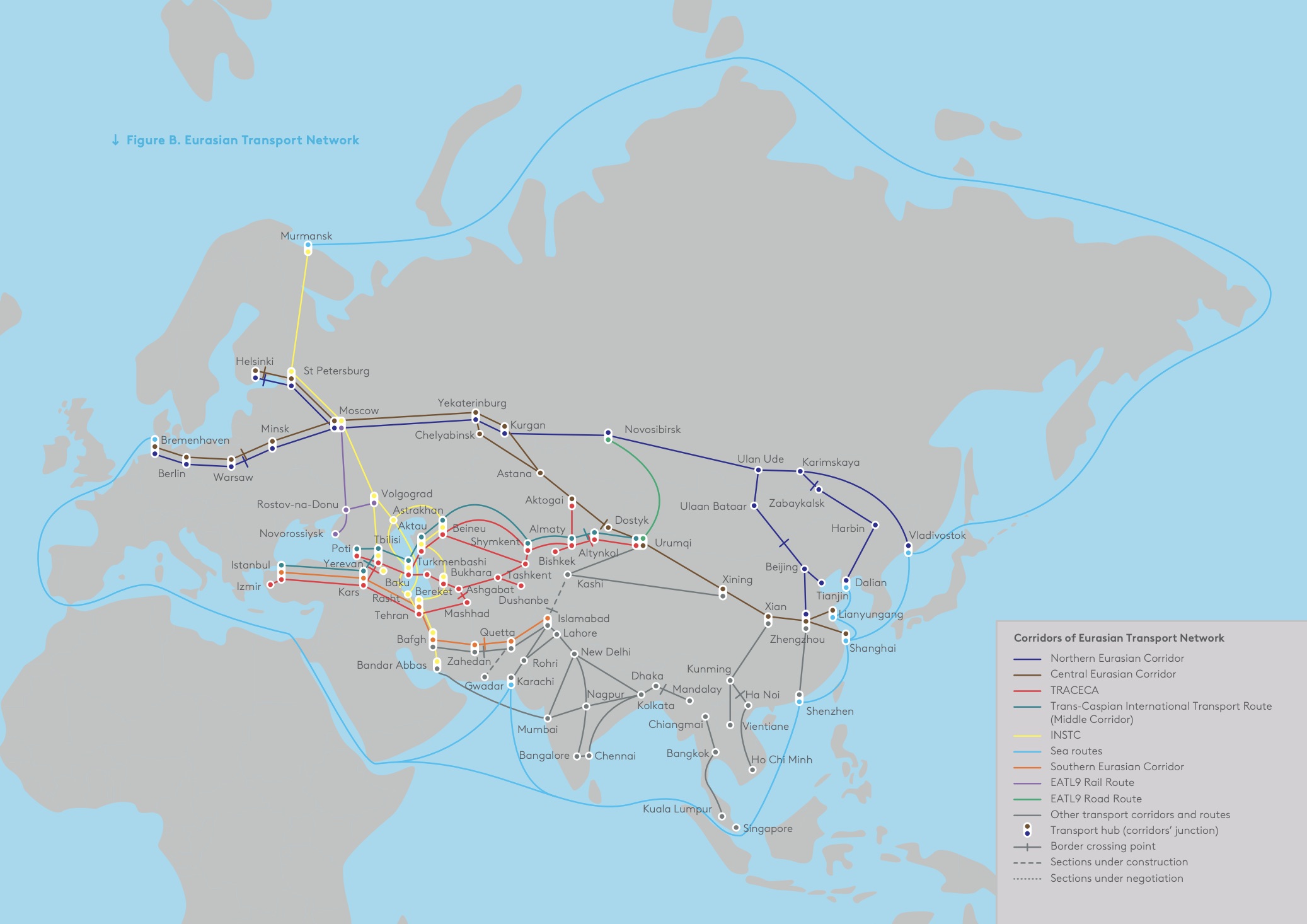
Three primary routes follow latitudinal corridors and are commonly used and the most lucrative options. These routes also carry the highest volume. Two routes perform best through this region. The first is the Northern Eurasian Corridor, and the second is the Central Eurasian Corridor, also known as the New Eurasian Landbridge, or the Southern Corridor. The third route, which has also seen considerable fanfare, is the Trans-Caspian route, which is sometimes also referred to as the New Eurasian Landbridge or the Middle Corridor or the Southern route. However, for our purposes, we will refer to it as the Trans-Caspian route, especially to differentiate it from the Central Eurasian Corridor, whose predominant route is through Kazakhstan. 
photo

(Eurasian Transport Network. Source: Eurasian Development Bank)

First, the Northern Eurasian Corridor spans over 12,000 km, originating from inland hubs such as Chongqing, Chengdu, and Xi’an, among others, then moving toward Russia by crossing Mongolia at Erenhot. The trains pass through Ulaanbaatar, then through Russian cities such as Omsk, Yekaterinburg, and Moscow, ultimately crossing Minsk and arriving at hubs like Małaszewicze or Terespol. On the other hand, the Central Eurasian Corridor runs from Urumqi in China into Kazakhstan for much of the transit before rejoining the line in Russia. The Trans-Caspian route is predominantly intermodal, developed in response to the geopolitical instabilities in Russia, but it requires crossing the Caspian Sea via ferries and feeders. The Trans-Caspian route is also relatively smaller than the other two, spanning approximately 4,000 kms. 


Operational Performance: What is the Current Status of these Routes?

The performance of these three routes has largely been shaped by major geopolitical events, maritime shipping disruptions, and, most importantly, investments in rail infrastructure. The oldest of the three, the Northern route, despite bearing the brunt of the impacts after the Russia-Ukraine war, remains the volume leader. The Trans-Caspian route, though it offered a “Russia-free” alternative and proved viable during the Red Sea crisis in 2024, has seen volumes decline as maritime trade returned to its usual levels since last year.

Overall, volumes are now normalizing, as the drastic peaks and valleys of the last 5 years have generally stabilized. When comparing the three routes by volumes transported, each has reached this stabilization for different reasons. The Northern route, which moves the most volume, is experiencing a 15% year-on-year decline as forwarders return to ocean freight, along with a decline in coal transport between Russia and China. By contrast, the Central Eurasian Corridor remains a leader in containerized freight, with the first half of 2026 seeing a 9% year-on-year increase. This also reflects growing trade between Kazakhstan and China, and their improving infrastructure to handle those volumes. Finally, the Trans-Caspian route is getting most of the spotlight, with a significant surge early this year; however, volumes still remain incomparable to the other two routes.
 

photo

Infrastructure Barriers & Bottlenecks

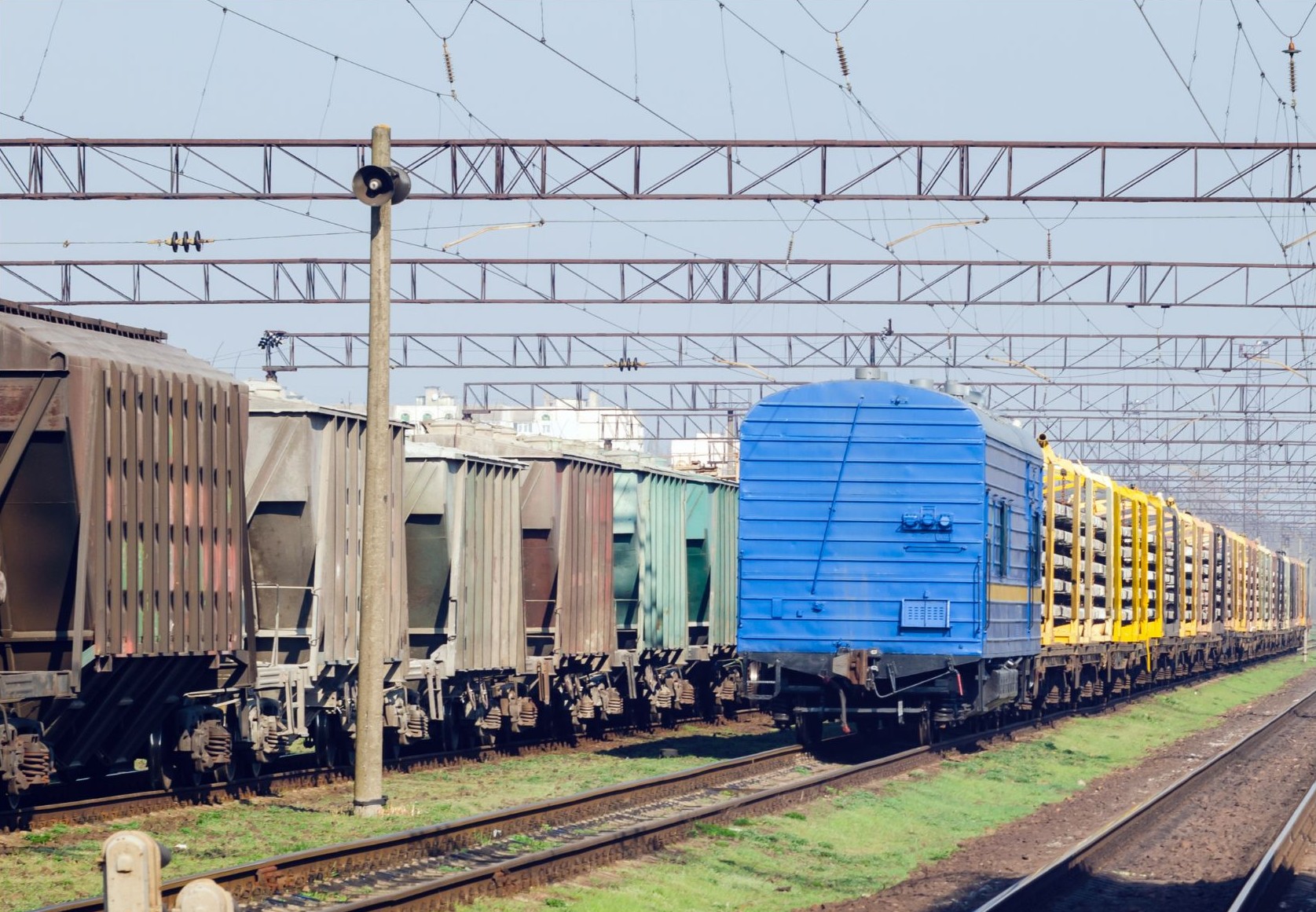
Gauge breaks remain the biggest impediment to Eurasian rail routes. China uses standard gauge, which switches to wide gauge through Russia and Kazakhstan, then switches back to standard gauge when entering Europe. These processes are time-consuming and can add about 24 to 36 hours to the journey (a conservative estimate). In the Trans-Caspian route, the major bottleneck occurs at the Caspian port crossing and can reach up to 10 days. The primary reason for this is the lack of infrastructure.

The other bottleneck, which also occurs at the borders, is the “paper barrier” of customs processes. Digitalization to harmonize processes across the multiple jurisdictions the train passes through is critical to faster, smoother functioning of the Eurasian routes and remains a key concern, requiring coordination of state authorities across the region. At the same time, regional conflicts have also created barriers; for example, unrest in Kazakhstan in 2022 caused delays. Despite these challenges, the region has still sustained cargo transport over the Landbridge and, individually, member states continue to develop infrastructure, mobility, and safety.

Investment & Future Connectivity

All three routes have seen significant capital investment that is currently powering massive infrastructure projects. Several key projects are underway in the northern route, including the modernization of the BAM and sections of the Trans-Siberian line. Similarly, along the Central corridor through Kazakhstan, a second main track is under construction, covering 836 kilometers and tripling capacity. A third development is the Bakhty-Ayagoz rail line, which would open another border crossing from China and add further volumes. Finally, the Trans-Caspian route is attracting growing interest from regional member states, who are working on a roadmap to increase the route’s capacity by expanding the Baku International Sea Port and constructing the Sarzha terminal at Kuryk Port in Kazakhstan.
photo

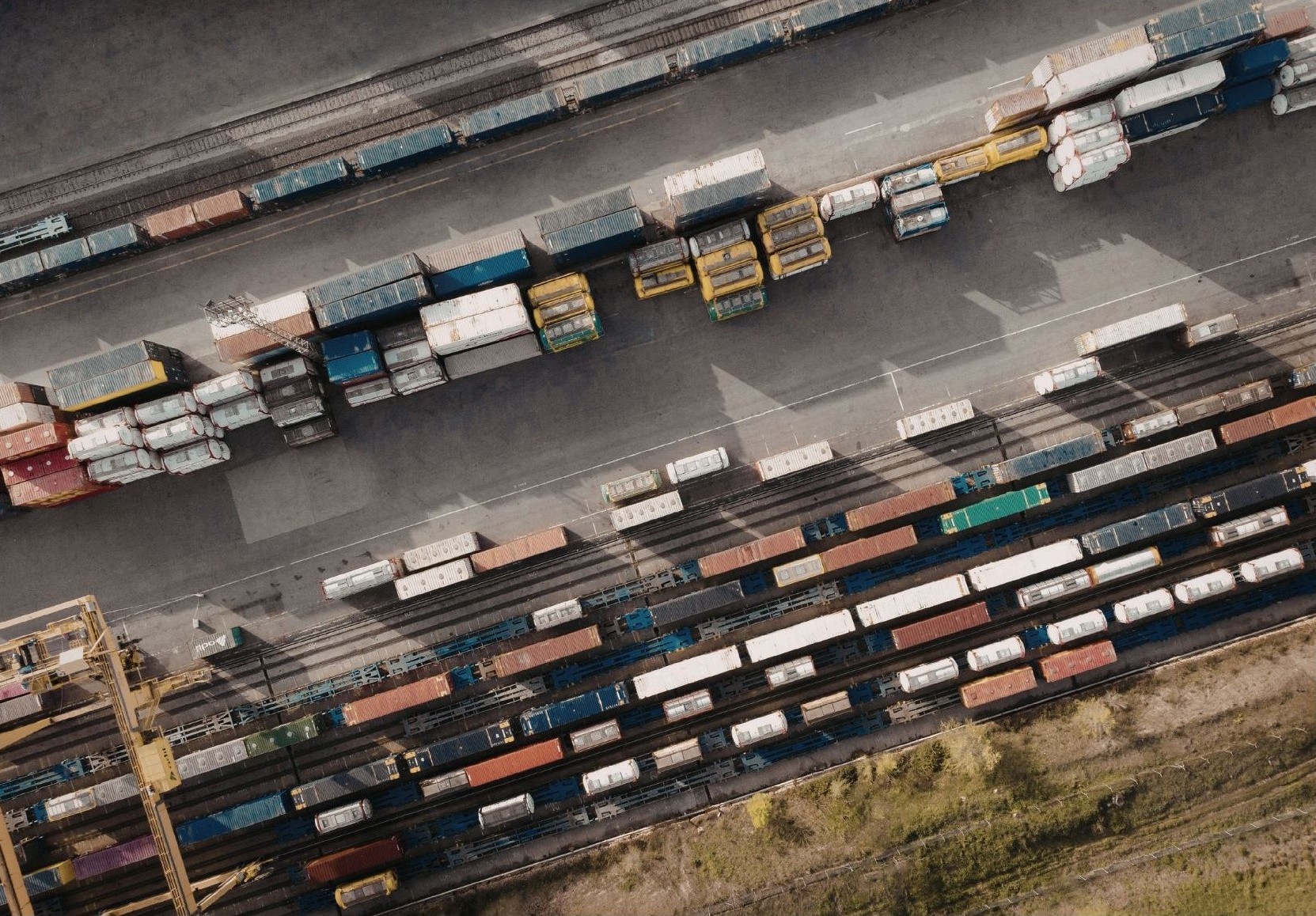
Alongside these developments, China-CEEC Customs Information Center reports that China-Europe Express has unveiled a “fourth set” of scheduled timetables that include seven more routes, bringing the total up to 17 scheduled routes connecting nine Chinese hubs to six European destinations. Container traffic along the network is also projected to increase, especially as high-value goods such as electronics, EVs, and fashion shift from sea and air to rail. As of July 2026, the Eurasian Development Bank cites about 402 projects that are planned or ongoing and would either directly or indirectly transform the railway sector and contribute to economic growth in the region.

As these routes continue to stabilize each year, it is becoming clearer that their growing operational resilience, coupled with their sustainability and cost profile, makes rail freight a lucrative option, especially for time-sensitive or high-value cargo. Despite the barrier, the data, the interest, and the vast number of developments show that Eurasian rail routes are a primary and equally competitive option. So, even if the fanfare has faded, the operational reality shows that the mantra “faster than sea, cheaper than air” still rings true. 

Rerailing The Conversation: An Overview of Developments in Eurasian Rail Freight in the Last Five Years
Alexander Global Logistics Inaugurates its Cutting-Edge Logistics Hub in Bremerhaven
Keeping it Cool: How Cold Chain Logistics Fosters EU-China Agri-Food Trade
The Backbone of European Trade and Commerce: EU’s Road Freight Industry
Demystifying Central Asia: How CPS Logistics Navigates This Evolving Region
Delivering Resilience: IGS Schreiner Responds to Global Challenges
The Last Mile Glitches: Trucking Cargo Away from the Ports
The Future of Logistics: Elastic and Omnichannel
The Pink Fleet: How GCD Glomb Defines Sustainable Growth
Bearing the Costs: How the Surging Fuel Prices Impact the Logistics Industry
On the Intersection of People and Supply Chain: A Conversation with Airmax Cargo
What Can the Ancient Silk Road Teach Us About Supply Chain Resilience?
Tackling Risks: Forwarders Find Critical Solutions in the Ongoing West Asia Crisis
Contract Logistics and Military Cargo as Strategic Upper Hands: How Langowski Logistics Redefines Its Expertise
S&D Logistics Efficiently Transports Large Pipes From Georgia to Kazakhstan
The Holy Grail of Logistics: The Invention of the Shipping Container
Turning Challenges into Opportunities: MEPL Establishes Itself in The CIS Region
Developing Rail Expertise in Southeast Asia: LEO Global Logistics Offers Insight into Their Multimodal Strategy
Carrying the Tradition Forward: New Silk Road Network’s Hanseatic Heritage
From Single Office to Regional Leader: Blue Bell Shipping’s Growth Journey
Airmax Cargo Budapest Honoured with Freight Forwarder of the Year Award Ahead of 30th Anniversary
CIMC Anda Shun Successfully Completes Multiple AOG Projects Worldwide
CIMC Anda Shun International Logistics Successfully Ships 27 Vehicles via RO-RO Service
Partnership Announcement: Business Solutions Partners
Sponsor Announcement: Alexander Global Logistics as the Coffee Break Sponsor
New Logistics of Kazakhstan: From Transit to Investment Opportunity
Sponsor Announcement: Ocean Bright Logistics Limited as the Lanyard Sponsor
CIMC Anda Shun Expands EU Line with BSA-Controlled Capacity via Etihad Airways
Sponsor Announcement: Korpershoek Warehousing & Forwarding as the Notebook Sponsor
Kato Transport Strengthens International Logistics with New Mongolia Branch and IATA Status
From Inquiry to Impact: The Growth of S&D Logistics’ OOG Operations
IGS Logistics Group Advances Food Logistics Capabilities through Certification and Cold Storage Growth
Sponsor Announcement: MEPL INTERNATIONAL LLC as the Happy Hour Sponsor
RailGate Introduces Biweekly Express Service from Xi’an to Hamburg
GCD Glomb Container Dienst Strengthens European Container Transport with Polish Trucking Focus
Alexander Global Logistics Expands in Bremerhaven with €20M Investment in State-of-the-Art Logistics Center
IGS Showcases Heavy Transport Expertise in Heilbronn Logistics Project
Double Win for CIMC Anda Shun: 2024 Diamond Awards from Polar Air Cargo
CIMC Anda Shun International Logistics Co. Ltd Successfully Executes Another Breakbulk Shipment in China
Alexander Global Logistics Successfully Handles Lumber Shipment via Khalifa Port for a South American Client
Driving Innovation: LEO Global Logistics Expands Rail Freight Capabilities
Alexander Global Logistics Delivers 90-Tonne Transformer with Precision and Innovation
TALOGIS Air & Sea Expands Rail Freight Services with New Xi’an–Hamburg Route
Mission Accomplished: MeerLand Ukraine Delivers Critical Military Equipment to IDEX-2025 Against the Odds
Exploring New Opportunities: Alexander Global Logistics and Abu Dhabi Ports Attend the 2025 Paper & Tissue One Show Together
China NVOCC Container Lines Limited Expands European Connectivity with New Routes and Enhanced Solutions
CFR Carshippers Boosts Logistics Capacity with New Bremerhaven Warehouse
Ringing in The New Year with Success: CIMC Anda Shun International Logistics Kicks Off Year of the Wood Snake with Triple Award Triumph
BOSSI & C. TRANSITI S.p.A. Expands Operations with New a Strategic Logistics Warehouse
Reflecting on 2024: CIMC Anda Shun's Milestones and New Services
HANSEATIC Slovakia Carries Out Meticulous Delivery of Heavy Industry Shipment from Shenzhen to Astana
Anil Mantra Logistix Triumphs in Timely Transport Amid Year-End Challenges
CIMC Anda Shun International Logistics Delivers Successful Shipment from Qingdao to La Spezia
Values, Vision, and Versatility: Inside MeerLand's Logistics Operations
alpha trans Unveils Rebrand to Match Five Decades of Growth
Langowski Logistics Celebrates 20 Years of Success with a Grand Gala
S&D Logistics Successfully Delivers Agricultural Equipment to CIS Countries
CIMC Anda Shun Launches New Cost-Effective Truck-Air Combination Service
Celebrating 12 Years of Success and Looking Forward to Many More: Baltic Consol Line Marks a Milestone
Sunila Yadav of Anil Mantra Logistix Wins the Women in Freight & Cargo Award For 2nd Time
Sponsor Announcement: Orbis LS
Sponsor Announcement: Artlog Lojistik
Scaling Up on The Road: Ostsped Logistics' Growth in the European Logistics Landscape
Fastmarkets event in Antwerp to welcome transport and logistics professionals working in forest products
Airmax Cargo Budapest Hits 100 Railway Containers, Reflecting Growth and Commitment!
Showcasing Expertise: CIMC Anda Shun International Logistics Completes Critical AOG Transport
Celebrating 20 Years of Excellence: Langowski Logistics Named Poland's Freight Forwarder of the Year 2023
From Poti to the World: S&D Logistics Ltd.’s Journey Beyond Borders
Airmax Cargo Budapest Demonstrates Project Cargo Know-How in Recent Shipment from UK to Hungary
Sponsor Announcement: CIMC Anda Shun International Logistics Co., Ltd
ABL Dissaco's Long Haul: Transporting Oversized Cargo from Spain to Germany
Successful Ground-Level Container Delivery by GCD Glomb Container Dienst GmbH
GCD Glomb Container Dienst GmbH Transports Components for an Offshore Drilling Platform Component
Millennium Logistics (Shenzhen): What it Takes to Excel as a Generalist
Sponsor Announcement: Korpershoek Warehousing & Forwarding BV
alpha trans Expertly Times Motorcycle Shipment from Stuttgart to Bangkok
Unlocking Possibilities: Baltic Consol Line Expands Its Freight Services
IGS Schreiner Polska's IGS Customs Agency Achieves AEO Certification
Anchored in Excellence: The Voyage of ARMOS BV in the Global Logistics Arena
MEPL International Wraps Up 2023 with a Monumental 110-Ton Sea-Air Shipment to Kazakhstan
Tracing the Evolution of Logistics in the CIS Market: In Conversation with Renaud Stiers from ABL DISSACO
Rails of Innovation: Navigating Evolving Markets – The Shenzhen Smile International Logistics Story
mail alliance Starts Partnership with E-commerce Giant Temu
Alexander Global Logistics Successfully Transports Massive Slag Carriers to the Port of Hamburg
IGS Logistics Group Boosts Intermodal Transportation Capabilities with Fifty 80-Foot Container Wagon Investment in Hamburg
Celebrating 5 Years of RailGate: A Journey of Growth and Success
Important Update About the National Import System (NIS) in Hungary
Artlog Lojistik Navigates Swift Chartering Project from Turkey to Kazakhstan
Sponsor Announcement: Anil Mantra Group
Sponsor Announcement: Alexander Global Logistics
Sponsor Announcement: TEU Bulgaria
Sponsor Announcement: CSL Poland
Sponsor Announcement: LEO Global Logistics
Langowski Logistics Opens State-of-the-Art Storage and Loading Yard in Gdynia, Paving the Way for Seamless Connectivity
InterMax Completes Multimodal Cross-Border Delivery of Oversized Mechanical Press
Opportunities and Challenges: CSL Holds Second Edition of the Intermodal in Poland: North-South Conference
CIMC Anda Shun International Logistics Coordinates Air Freight Delivery of Overweight Cargo from China to Europe
InterMax Logistics Solution Safely Executes Road Transfer and Loading of Oversized Cargo in China for Export
Flying High: CIMC Anda Shun International Logistics Wins Best Supporting Agent 2022-2023 from Turkish Airlines
JadeWeserPort Wilhelmshaven Signs Strategic MoU with Ningbo Port International Logistics and Xiamen C&D Group

Subscribe to our newsletter

Keep up to date with our member activities and events.