Over the years, consumers in China have developed particular preferences for many European exports. While European wine has always been favored in China, dairy and infant food saw explosive growth between 2008 and 2010. European pork also gained momentum in the early 2020s, as the Swine Fever outbreak burdened China’s pork production. Concurrently, the EU imports many fresh and frozen vegetables and meats, tropical fruits, nuts, spices, and even pet food from China. By 2022, China had become the EU's third-largest agri-food trade partner, with exports totaling a whopping €15.8 billion.
Behind these delicate consumables is the practice of cold chain logistics, which preserves these products until they reach consumers' hands. Unlike conventional freight, many agri-food items and perishables require temperature-controlled conditions at every step to safeguard product quality and safety. In this article, we discuss some critical aspects that are central to cold chain logistics, especially in relation to EU-China agri-food trade, challenges this niche faces, and finally, the developments that are propelling the industry.
What makes Cold Chain Logistics Demanding?
The growing agri-food and perishables trade volumes between the EU and China rely extensively on specialized logistics, driven by infrastructure designed to handle and transport temperature-sensitive products. Often, companies with expertise in this area own temperature-mapped warehouses, where facilities are “mapped” with calibrated sensors to detect hot and cold spots, ensuring all areas remain within required temperature limits. Sometimes perishables and agri-food trade also move through specific hubs and terminals equipped to handle temperature-sensitive goods. London’s Heathrow is one such example of a premier hub with expansive capabilities.
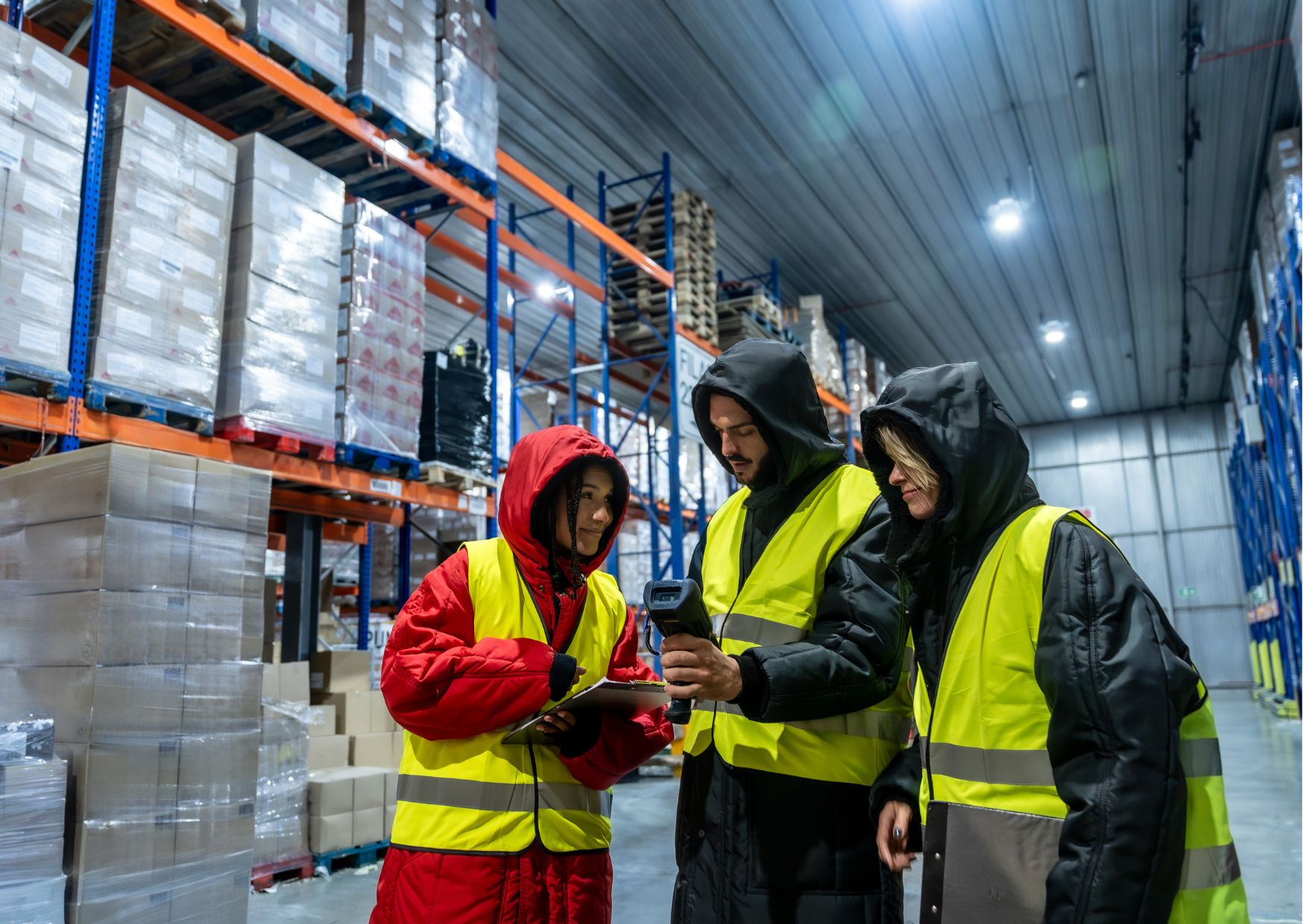
(Cold Chain Warehouse. Stock Image)
Central to cold chain logistics is the specialized refrigerated container, also commonly known as the reefer. Reefer units are insulated containers with refrigeration systems that keep cargo temperature within specified limits during transportation. Depending on the transport mode, they can either have their own power source or be plugged into the transport's energy units. When moving by ship, reefer containers tap into the vessel's power units; when transported by rail freight, onboard diesel generators or electric lines power the reefers. Infrastructural elements and their maintenance are critical factors that make cold chain logistics so complex.
But infrastructural capacities are just the tip of the iceberg! Many companies in cold chain logistics, especially those handling agri-food products and perishables, must undergo numerous compliance checks and certifications, as strict international and national regulations apply to these products to maintain standards. Companies in Europe are legally obligated to comply with HACCP (Hazard Analysis and Critical Control Points) requirements when undertaking cold chain logistics. This is a rigorous system that prevents food from becoming vulnerable, degrading, or cross-contaminated due to improper handling. Similarly, the UN treaty ATP also regulates transportation standards for temperature-sensitive cargo.
More specifically, in EU-China agri-food trade, there are three critical aspects that companies must attend to: consumer safety, traceability, and facility registration. When exporting from the EU to China, exporters must comply with China's Food Safety Laws, especially those managed by the GACC (General Administration of Customs of China). One of the GACC decrees includes the registration of all overseas producers, processors, and food and beverage exporters via the CIFER System. The registration process involves inspections and audits. Often, high-risk items such as meat, seafood, or fruits are subject to bilateral protocols that EU member states and China may sign. Labeling, packaging, applying for special food approvals, or filing as traders are also aspects that companies must undertake, meaning that so often producers require a strong metabolism to tackle these bureaucratic constraints.
On the contrary, although the EU also imposes stringent regulations, it places the legal onus on the EU-based importer instead. But, Chinese companies that ship animal-origin products must be approached and listed by the EU with guarantees from Chinese authorities. In 2026, the EU announced new cold storage rules requiring cold storage facilities in China to obtain CNAS-accredited EPDs (Environmental Product Declarations) and to include ISO certifications for cold chain processes. Like their Chinese counterparts, labeling and packaging are also highly specified. Apart from considering these regulatory complexities when working with exporters, logistics companies are often tasked with maintaining batch-level traceability and appointing representatives to handle recall procedures for cross-border imports.
Developing Technology That Keeps It Cold
In a broader sense, cold chain logistics is progressing towards a more reactive and data-driven model. The sector relies heavily on technological inputs focused on real-time visibility, quality management, and hardware efficiency. IoT and real-time sensors provide continuous monitoring of cargo conditions. Sensors gather multiple parameters of the cargo, such as temperature, humidity, ethylene levels (in products that undergo ripening), CO2 levels, light exposure, vibrations, or shocks. Coupled with connectivity solutions, these sensors can communicate through satellite networks, providing real-time tracking and data for products, especially during transport via rail corridors or by sea.
Lately, companies have been using sensors to gather data and transform it into “actionable intelligence” through AI and predictive technologies. These supply chain models teach systems to predict delays and identify exceptions that require intervention. Machine learning algorithms are also used in warehouses to leverage the history of biological products to predict shelf life, detect anomalies, and prevent breach of critical threshold.
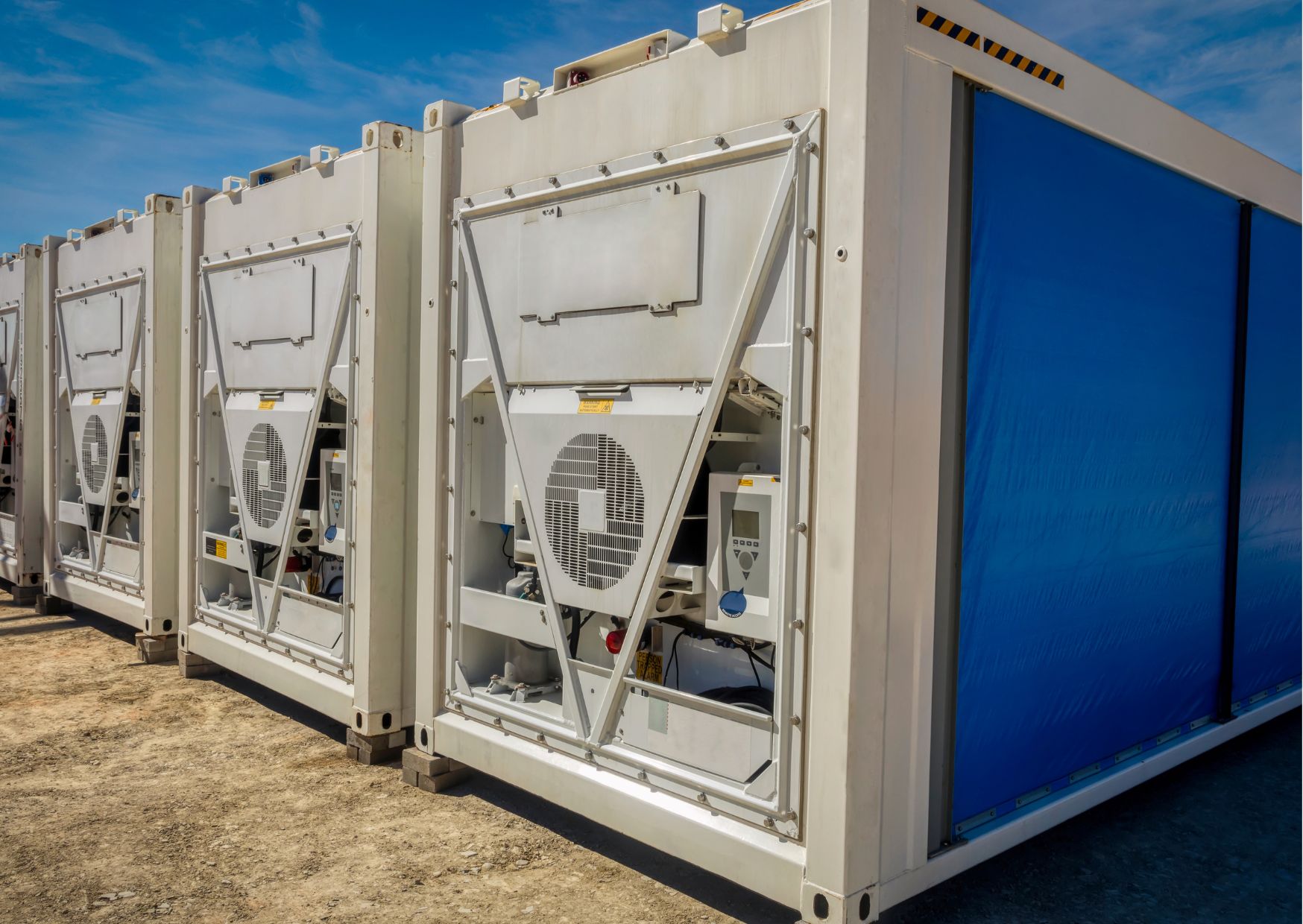
(Reefer Units. Stock Image)
Exporters from both the EU and China also rely on blockchain technology to provide indestructible, tamper-proof records of the cold chain, thus building trust among the various stakeholders in the process. The other interesting development in the field is smart contracts, which are automated protocols that monitor compliance with temperature specifications without manual review and can trigger alerts for “condition -based payments” if the thresholds are not maintained.
Along with intelligent systems, hardware technologies, especially relating to reefer systems, are also evolving. Often, reefers are developed for niche products and may even use cryogenic solutions to maintain frigid temperatures. In the EU, the industry is undergoing a sustainability and green transition by moving away from HFCs towards natural refrigerants such as CO2 and hydrocarbons. Since reefers are also power-intensive, efficient systems that meet zero-emission mandates have also become a focal point. Many ports are building capacities to offer on-power shore for reefers on docked vessels, thus removing the need for diesel generators. To tackle expanding carbon footprints, warehouses are incorporating solar power to reduce their carbon footprints, and reefers are adopting rechargeable batteries to power their refrigeration systems.
The extensive use and development of technology in cold chain logistics are largely driven by the need to reduce agricultural and pharmaceutical waste resulting from dysfunctional systems. Coupled with demanding regulatory frameworks and high infrastructure costs, the cold chain can be considered a high-risk, high-reward sector, where a single brief spike in temperature can lead to the rejection and waste of a shipment, leading to heavy financial losses and, in worst cases, can also lead to bans from regulatory bodies. These risks also push logistics companies to perform with highest caution because it can impact relations with producers and incur contractual penalties. And so, as one of the most intensive trade corridors, the EU-China agri-food industry’s success depends on ensuring export safety and operational sustainability through efficient cold chain logistics.

.svg)
.svg)


