Logistics in Central Asia is often characterized as opaque and challenging; however, CPS Logistics, a member of the New Silk Road Network from Kyrgyzstan, proves otherwise. Headquartered in Bishkek, the capital of Kyrgyzstan and the heart of Central Asia, CPS Logistics has carved out a significant niche by providing reliable cross-border logistics solutions throughout the region. The company does not see itself as a mere freight-forwarding entity but rather positions itself as a strategic partner for businesses navigating the region.
In our conversation with Abduaziz Makhmudov, the CEO of CPS Logistics, we discuss how the region is transforming in terms of business and ease of cargo movement. We also learn about how the company was established and developed an operational mindset over the years that focused on undertaking complex projects. In the interview, Abduaziz sheds light on the expertise required to do business in Central Asia, which largely relies on a company’s ability to be flexible, transparent, and efficient. Finally, the interview also addresses and expands on the developments in the Central Asian market and their implications for global trade.
NSRN: Your company’s portfolio is very well-rounded. We would like to learn more about your company’s history and what sets CPS apart from other local logistics companies. How was the company established, and what were the motivations behind it? Moreover, it would be interesting for us to know how you ventured into the logistics industry.
Abduaziz: CPS Logistics was established with a clear understanding of the realities of logistics in Central Asia and the CIS. From the beginning, we understood that this market requires much more than standard transportation services. It requires flexibility, fast decision-making, and the ability to operate effectively in environments where regulations, infrastructure, and transit conditions can differ dramatically from one country to another. Our goal was to build a company capable of solving complex cross-border challenges, not simply moving cargo from point A to point B. Over time, this approach became one of the main reasons clients trusted us with increasingly complicated projects across the region.

(CPS Logistics. Picture Credit: CPS Logistics)
What sets CPS Logistics apart is our operational mindset. We understand that logistics today is no longer only about transportation, but rather about stability, adaptability, and business continuity. Customers come to us not only for freight solutions but also because they need partners who can react quickly under pressure, find alternatives when situations change unexpectedly, and maintain control throughout the entire supply chain.
My personal journey into logistics happened somewhat unexpectedly. In 2011, I was working in Kuwait within the HoReCa industry, where I became involved in operations connected to warehousing, production processes, and the handling of perishable products. That experience exposed me to the operational side of supply chains and gradually sparked my interest in global logistics.
I still clearly remember one particular moment. One day, instead of taking my usual route to work, I drove toward the seaport area simply out of curiosity. I wanted to see how the port ecosystem functioned in real life and how the vessels, terminals, customs operations, trucking flows, warehouses, and the entire infrastructure surrounding international trade worked together. That experience had a strong impact on me because I realized that logistics is far more than transportation itself. It is an invisible system connecting economies, industries, and global commerce. Over the years, that interest evolved into a professional direction, and today logistics remains an industry that constantly challenges you to adapt, think strategically, and solve problems in real time.
NSRN: I understand that your company's critical expertise lies in cross-border operations and handling complex shipments across the CIS countries, where each country has markedly different regulations. What is their biggest concern while moving goods through the region, and how do you tackle that? Plus, what do your customers expect when it comes to devising logistics solutions for them?
Abduaziz: The biggest concern for customers moving cargo across the CIS region is unpredictability. Every country operates differently. Customs regulations, border procedures, certification requirements, infrastructure capabilities, and even operational culture can vary significantly from one market to another. In practice, this means that even well-planned shipments may suddenly face delays, route changes, documentation issues, or operational bottlenecks.
And today, these challenges are no longer limited only to operational matters. Businesses also have to navigate geopolitical shifts, sanctions-related risks, changing transit corridors, and increasing pressure on global supply chains. As a result, customers are no longer simply looking for transportation providers. Success in our region depends on how quickly you can react to unexpected changes. Alternative routes, multimodal solutions, border coordination, and communication with local authorities and partners are all critical factors in moving cargo.

(Abduaziz Makhmudov. Picture Credit: CPS Logistics)
Our customers expect transparency, speed of response, and confidence that their cargo will continue moving even when situations become complicated. They are looking for partners capable of maintaining stability under constantly changing conditions. This is exactly where our expertise becomes valuable. At CPS, our role is not only to move cargo, but to constantly adapt logistics solutions in real time depending on how circumstances evolve. In many ways, logistics in Eurasia today is no longer only about transportation. It is about resilience.
NSRN: Bishkek, in addition to being the capital of Kyrgyzstan, is also a major logistics hub in the country. Outside the region, the forwarders fail to understand how Bishkek and Kyrgyzstan position themselves in Eurasian trade, perpetuating the narrative of “mystery regions”. How would you advise forwarders and those looking to do business in the region to familiarize themselves? What are some other notions about the country and region that do not hold today?
Abduaziz: For many years, Central Asia was viewed by the outside world as a “mystery region”, difficult to understand, difficult to operate in, and disconnected from major global trade flows. In my opinion, that perception is now outdated. Today, the region is becoming increasingly important within Eurasian logistics and trade. Kyrgyzstan, in particular, occupies a strategically valuable position between China, Central Asia, and the CIS markets, while Bishkek has gradually evolved into an important operational and distribution hub for regional cargo flows. One of the biggest misconceptions about the region is that logistics here is slow or inefficient. In reality, businesses in Central Asia have developed high levels of adaptability precisely because the environment has historically been dynamic and constantly changing. We are used to solving problems quickly, adjusting routes in real time, working under pressure, and maintaining cargo movement despite changing circumstances.
I would strongly advise international forwarders and companies interested in the region not to rely solely on outdated external perceptions or assumptions. The best way to understand Central Asia is through direct engagement, that is, by visiting the region, meeting local operators, observing infrastructure development, and understanding how trade actually moves across Eurasia today.
What many people outside the region still underestimate is how rapidly logistics is evolving here. Discussions surrounding the Middle Corridor, regional infrastructure integration, multimodal transportation, and supply chain diversification are no longer theoretical concepts; rather, they are actively reshaping trade routes across Eurasia. I believe Central Asia has significant potential because global supply chains today are seeking not only scale but also resilience, diversification, and flexibility.
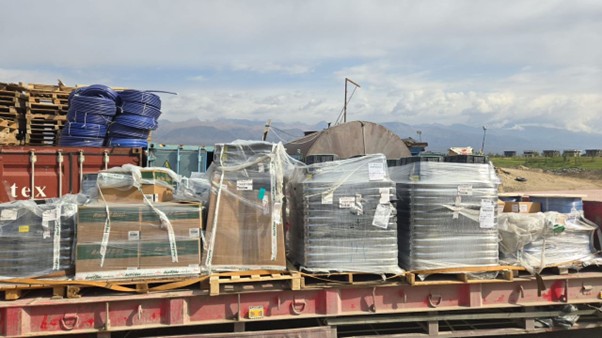
(Picture Credit: CPS Logistics)
NSRN: Kyrgyzstan often finds itself in competition with Kazakhstan, which has positioned itself as a central hub in Eurasian multimodal trade, given its direct rail link to China. What strategic advantages does your region provide, and how would they benefit from choosing CPS over other regional players?
Abduaziz: Kazakhstan has undoubtedly established itself as one of the major logistics powers in Eurasia, particularly through large-scale infrastructure investments and direct rail connectivity with China. However, I believe the future of Eurasian logistics will not be determined by infrastructure scale alone. Today, businesses are no longer simply searching for the largest corridor or the cheapest route. They are seeking dynamic capabilities amid uncertainty. This is precisely where regions like Kyrgyzstan gain strategic importance. Kyrgyzstan’s advantage is not necessarily based on competing head-to-head in terms of sheer infrastructure volume. Our strength lies elsewhere: in agility, adaptability, and operational responsiveness. As a result, Central Asia has built a culture of rapid decision-making that is becoming increasingly valuable in today’s logistics environment. In many ways, the region learned how to operate under supply chain disruption long before the rest of the world began discussing supply chain resilience as a global priority. This also informs our philosophy at CPS Logistics; we don’t simply offer transportation capacity, instead, we provide adaptive logistics solutions designed for highly dynamic environments across Central Asia and the CIS region.
In addition, Kyrgyzstan’s geographic position creates growing opportunities for multimodal integration among China, Central Asia, the CIS region, and the emerging Middle Corridor connectivity initiatives. However, regional connectivity itself is not a new concept for Central Asia. Initiatives such as TRACECA played an important role in shaping early discussions around Eurasian transport integration and alternative trade corridors linking Europe, the Caucasus, Central Asia, and Asia more broadly. Today, many of those ideas are evolving into a much larger strategic reality. Overland corridors across Eurasia are growing rapidly, and Central Asia is becoming an increasingly important part of that transformation. The future of Eurasian logistics will belong not only to the largest hubs, but to the regions and operators capable of adapting fast to a changing world.
NSRN: What are some critical commodities that capture the Kyrgyzstan market? We also understand that, apart from regional trade partners like Uzbekistan and Kazakhstan, global giants like China and Russia have established trade interests, and there is now growing interest from European countries as well. Where do you see the strongest growth opportunities in new markets and trade corridors?
Abduaziz: Kyrgyzstan’s market has traditionally been driven by consumer goods, FMCG products, electronics, textiles, machinery, construction materials, food products, and regional cross-border trade. However, I believe the most important story today is not simply about commodities themselves but about the scale of transformation currently underway across Eurasian trade and supply chains.
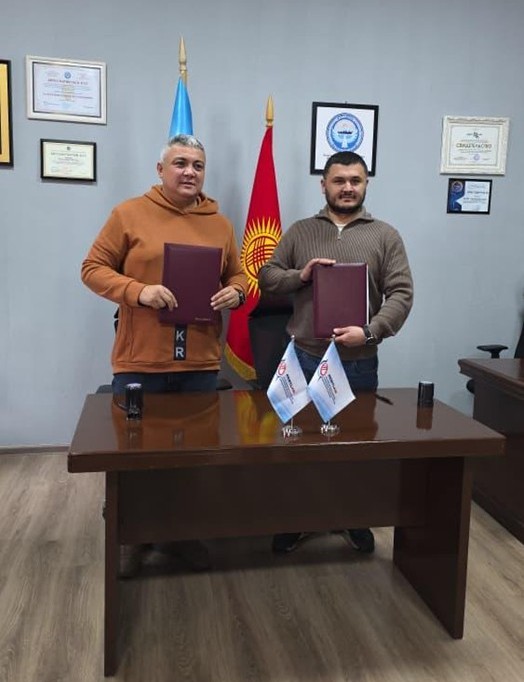
(Abduaziz Makhmudov (R). Picture Credit: CPS Logistics)
We are entering a period where Central Asia is gradually evolving from a transit geography into an integrated logistics and trade ecosystem. Historically, the region maintained strong economic ties with neighboring markets such as Kazakhstan and Uzbekistan, while China became a dominant driver of manufacturing and trade across the region. Russia also remains deeply integrated through long-established economic and supply chain relationships. But what is especially important today is the emergence of entirely new growth dynamics. We are now seeing rapidly increasing interest from European businesses and international investors toward Central Asia. This is being driven by several major global shifts happening simultaneously: diversification of supply chains, geopolitical restructuring, rising interest in alternative transit corridors, and the search for more resilient trade networks across Eurasia.
As global trade models continue changing, I believe some of the strongest growth opportunities in the coming years will emerge in areas such as multimodal transportation, warehousing infrastructure, regional distribution centers, consolidation hubs, cross-border trucking, e-commerce logistics, and integrated supply chain solutions throughout Central Asia and the CIS region. The Middle Corridor and broader Eurasian connectivity initiatives are especially important in this transformation. We are already seeing increasing cargo movement and strategic attention toward routes connecting China, Central Asia, the Caucasus, Türkiye, and Europe. And this is where I see one of the biggest long-term opportunities for Kyrgyzstan. The country has the potential not only to benefit from transit flows but to become an important operational platform supporting regional distribution, multimodal coordination, trade integration, and supply chain management between multiple markets.
For companies like CPS Logistics, these developments create significant growth opportunities because businesses entering the region need partners with local expertise, operational control, regional connectivity, and the ability to solve problems in highly dynamic cross-border environments. I believe the next major phase of Eurasian trade growth will belong to the regions and operators capable of connecting markets efficiently while remaining flexible enough to adapt to a rapidly changing global environment.
NSRN: The impacts of the conflict in the Gulf region are now trickling over to other parts of the world. Those dependent on the Gulf countries are anticipating an oil shortage. What are some concerns from the war that are being considered in your country? Reports indicate that there are already concerns about the reduction of transit cargo from Iran. Do you already see these effects? And if so, how does CPS Group, in particular, equip itself to remain flexible in the face of precarity?
Abduaziz: The Gulf conflict is being closely monitored by the entire logistics industry because today's supply chains are deeply interconnected. For countries like Kyrgyzstan, the concern is not limited only to oil prices or fuel shortages. The much bigger risk is instability across transit corridors.
For landlocked countries, any geopolitical escalation immediately creates vulnerability around border accessibility, transit continuity, customs procedures, route reliability, and cargo movement between regions. We have already seen how quickly situations can change when borders become restricted, transit procedures tighten, or cargo flows through certain directions slow down significantly. Routes connected to Iran are naturally receiving increased attention right now, and many market participants are reassessing their exposure to that corridor.

(Picture Credit: CPS Logistics)
The challenge is that once one route becomes unstable, pressure immediately shifts toward alternative corridors. This creates congestion at border crossings, trucking shortages, limited capacity, increased transit times, and rising transportation costs throughout the region. In periods of instability, clients need more than transportation providers. They need operational partners capable of maintaining continuity when logistics systems become unpredictable. Hence, our role goes far beyond arranging cargo movement.
We constantly monitor border conditions, assess corridor risks, coordinate with regional partners and carriers, redesign routes in real time, and develop alternative multimodal solutions as circumstances evolve. A border restriction, sudden congestion, or regulatory shift in one country can immediately impact cargo movement across several markets. Our job is to react before disruptions become critical for the customer.
I believe companies operating in Central Asia have developed strong resilience precisely because the region has historically required adaptability. Businesses here are accustomed to operating amid uncertainty, solving problems quickly, and maintaining cargo flow despite changing external conditions. Today, this operational resilience is becoming one of the region’s strongest strategic advantages, and for companies capable of operating efficiently, such as CPS Logistics, it creates major opportunities.

.svg)
.svg)


