IGS Schreiner GmbH has always been committed to its customers by providing tailor-made, reliable, and efficient solutions across Europe and Eurasia. At the heart of their operations is their ability to gauge and meet the specific needs of their clients, ensuring their solutions are effective and dependable. By integrating digitization and technological processes with low-emission, energy-efficient solutions, IGS Schreiner grounds its ethos in forward-looking, sustainable practices.
In our interview with Henning Eggers, who heads the Sales and Marketing division at IGS Schreiner, we touched on critical global changes shaping logistics businesses today. Through the interview, we also learned how IGS Schreiner strategizes in these dynamic times and continues to develop new capabilities. We also discuss the challenges and opportunities for ocean, rail, and air freight, and how owning assets allows them a bit more flexibility to carve a plethora of solutions. Henning Eggers, whose straightforward persona paints a clear picture of the company's strengths and capabilities, also outlines what it means to support customers through challenges and to build stronger and lasting partnerships.
NSRN: Our industry has seen one crisis after another, be it surging shipping costs, container shortages, fuel price spikes, lack of personnel, or route disruptions due to geopolitical conflicts. These consecutive challenges pushed logistics companies to assess precarity and adopt flexibility. How and in what ways has IGS Schreiner responded to these changes? And what are some of the latest developments within the company that enable it to be flexible?
Henning: Recent years have shown that resilience in logistics is not just a buzzword, but a matter of survival. In fact, we have been operating in a state of constant crisis over the last few years – from the pandemic and geopolitical tensions to massive cost increases. Considering transport between Asia and Europe, particularly Germany we have witnessed impacts on transit times or volumes. China Rail products were impacted by sanctions in the northern corridor, prompting clients to opt for ocean freight despite long transit times.
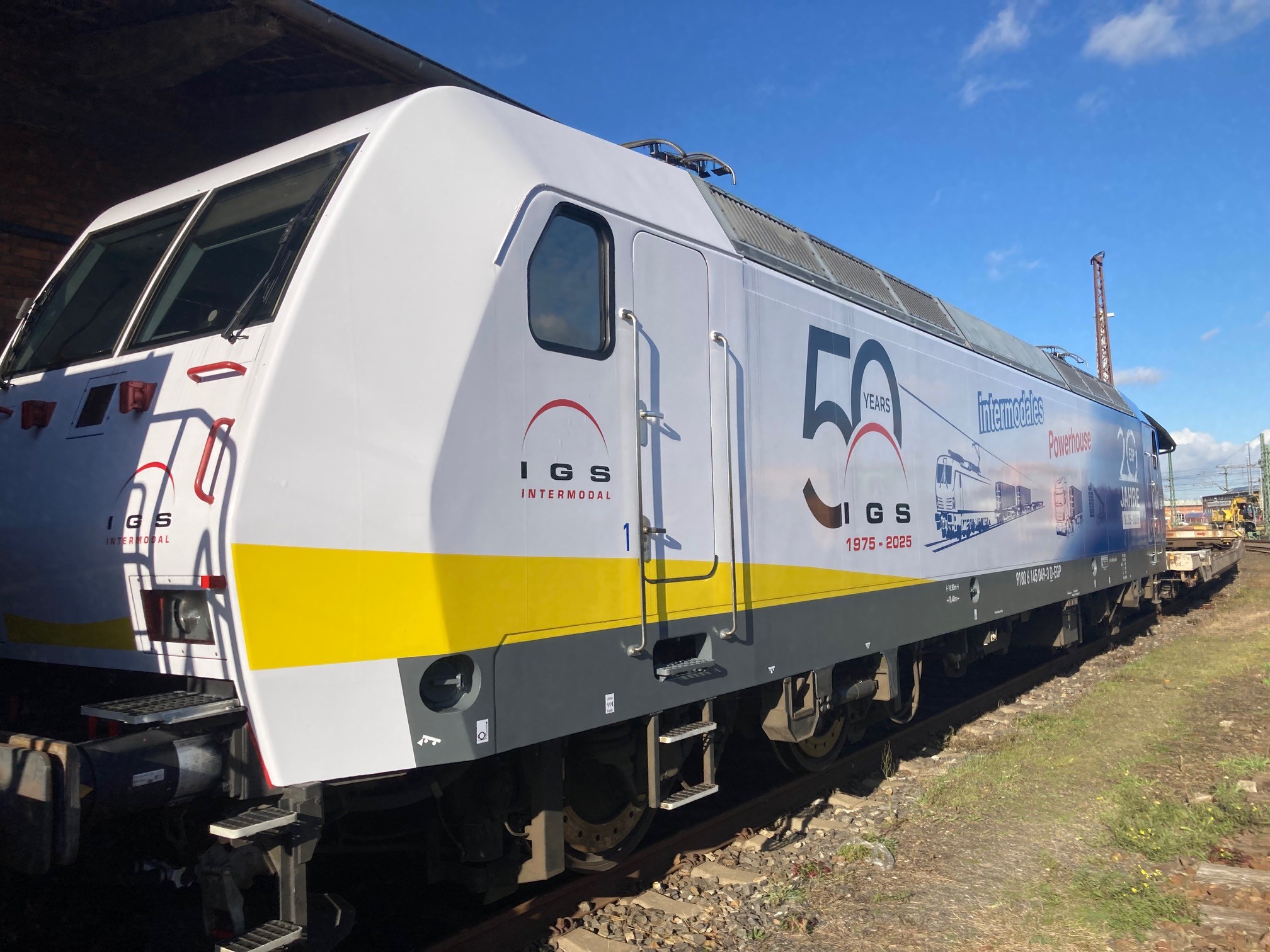
(IGS Rail Freight Capabilities. Picture Credit: IGS Schreiner)
As an owner-managed company, our ability to make decisions, react, and act quickly is actually a critical advantage. For example, in recent years, we have diversified our transport chains, tried to develop alternative routes, and communicated more closely with our partners worldwide. At the same time, we are striving to further digitize our internal processes wherever possible, so that we can react more quickly to changes.
What makes us particularly flexible today is the combination of a strong network, experienced staff, and the ability to develop individual solutions for our customers – even under difficult conditions.
NSRN: IGS Schreiner has always maintained an expansive portfolio and an extensive network across its entities, whether in logistics, warehousing, or customs. How do these arms inform your company's abilities to undertake end-to-end supply chain management for your clients? And as supply chains become increasingly complex, how does such a portfolio provide a competitive edge?
Henning: Our diverse portfolio is a key component of our business model. We don’t view logistics as a series of individual services, but rather as a comprehensive process along the entire transport chain. We don’t just want to organize transport; we want to manage entire supply chains.
Having transport, warehousing, and customs services all under one roof enables us to manage processes seamlessly from start to end. For example, in a particular case, we had clients for whom we had arranged pickup of already-packed FCL containers, but due to vessel delays, the containers could not be delivered on schedule and required interim storage. We could support that request, as we have capacity at our container freight station to handle that volume. Often, to prevent running up storage costs at the terminal, which can become very high, we can move containers outside the terminal but within port limits. Since we have a bonded area, we can store cargo at a lower cost than the terminals.

(Infographics Showing IGS' Services. Picture Credit: IGS Schreiner)
I must also emphasize that we are an asset-based company, meaning we run own terminals, depots, rail fleet, trucks, and warehouses. So we essentially have direct influence over the service, quality, and capacity. On the other hand, for our customers, this means fewer interfaces, greater transparency, and, above all, greater reliability, emanating from a single source and with clear responsibilities. This is a significant competitive advantage, particularly in global supply chains that are becoming much more complex: we strive to reduce interfaces, increase transparency, and respond quickly to changes. Many of our customers appreciate that they can rely on us as a partner – not just as a service provider.
NSRN: Over the last few years, there’s been a much more multimodal approach to China-EU trade. How feasible does rail transport continue to be proven? What are some alternatives that IGS China Rail Division considers when continuing to develop this product?
Henning: Rail transport between China and Europe remains a key component of multimodal solutions. The China Rail business model really makes sense when transit times are good, since it sits between ocean and air freight. You save time compared to sea freight and save on transport costs compared to air. Moreover, a critical aspect of our intermodal service is door-to-door service. We connect the North Range ports, such as Hamburg, Bremerhaven, Wilhelmshaven, Rotterdam, and Antwerp, to our infrastructure in southern Germany, including the last-mile trucking.
Speaking of geopolitical developments, we have witnessed uncertainties along traditional routes, which have recently led to a re-evaluation, at least among many of our customers. We continue to monitor the situation very closely, exploring alternatives, and thinking less in terms of fixed routes and more in terms of flexible, multimodal solutions. In concrete terms, this means: we explore alternatives, combine modes of transport, and continually adapt our solutions to the current situation. Our aim is always to find the best and at the same time safest option for the customer.

(IGS Truck Fleet. Picture Credit: IGS Schreiner)
NSRN: Has IGS Schreiner felt the impact and the need to partake in the latest logistics trends, such as AI-driven logistics optimization, automation, a growing e-commerce industry, last-mile delivery solutions, and cloud-based digital transformations? And what other innovations or products do you think will become pivotal in the years to come?
Henning: Major trends such as digitalization, automation, and AI are also long established with us as a medium-sized company, though with a clear focus on practical benefits. This applies both internally to our process optimization and externally to our customer relations.
We are making targeted investments in digital tools for shipment tracking, process optimization, and data analysis. At the same time, personal contact with our customers and partners remains a key factor for success. We are convinced that people continue to play a central role in our business, especially when things get complex.
In the coming years, we see great potential, above all, in intelligent data linking, sustainable logistics solutions, and resilient supply chains. For us, innovation is a goal in itself and also provides measurable added value for our customers. I believe the future lies in combining intelligent systems that provide support with experienced staff who make the right decisions. Added to this is the issue of sustainability, which is a big topic in Germany and the EU. To make headway in this aspect, we have already switched some of our terminals to HVO 100 fuel to reduce CO2 emissions. Furthermore, we are investing in e-trucks to ensure zero emission last-mile. We can also provide our clients with emission reports for their shipments. We recognize that sustainability will continue to grow in importance over the coming years, and it is essential for us to address these changes proactively.
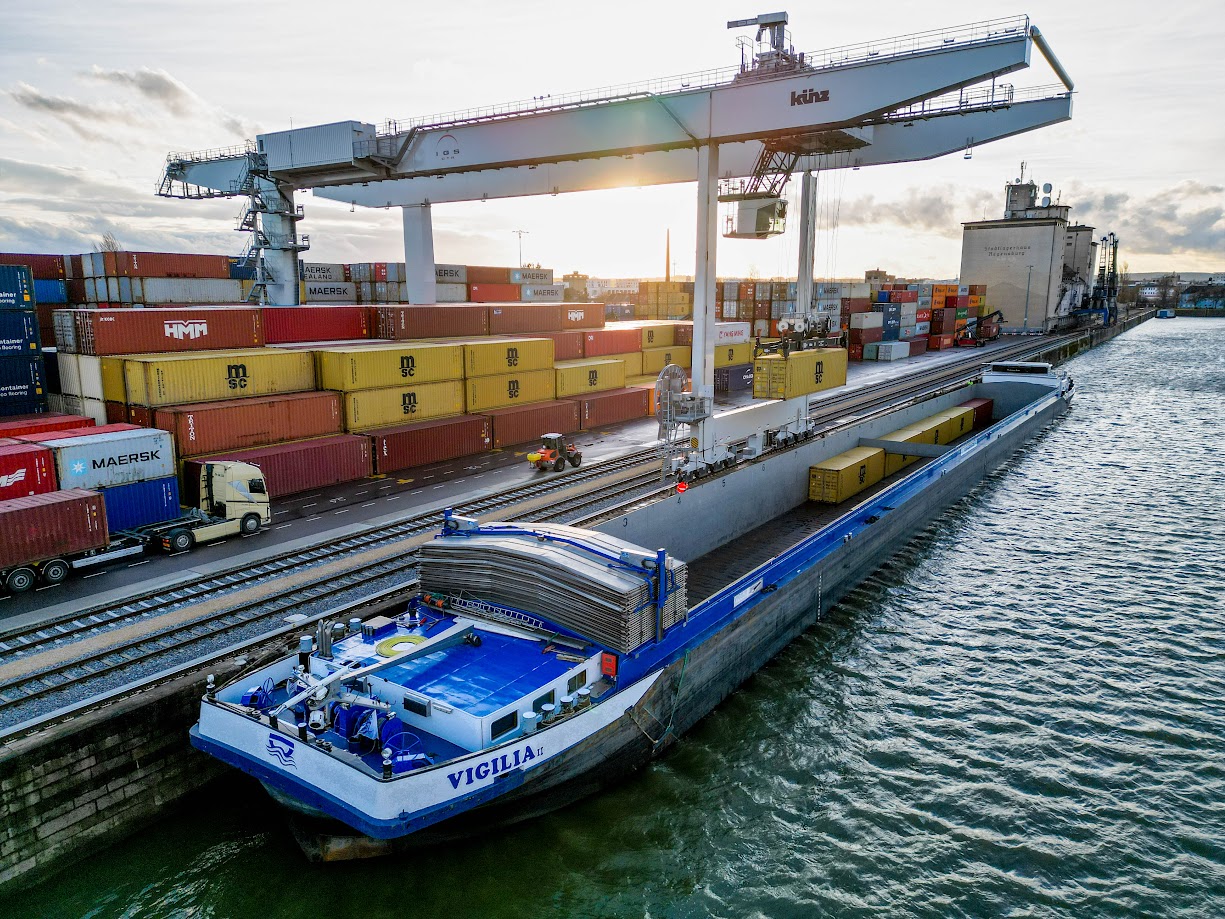
(Picture Credit: IGS Schreiner)
NSRN: The effects of the ongoing conflict in the Gulf and West Asia are slowly trickling into our lives, especially with the closure of the Strait of Hormuz. There has been major confusion in the trade between the West and the East. Are there any impacts that IGS Schreiner is already accounting for? Is there any real concern that logistics companies must consider in the next few months, in relation to the conflict?
Henning: Geopolitical tensions have become part of everyday life in international logistics. The current situation demonstrates once again just how significantly geopolitical developments influence our industry. The ongoing escalation in the Strait of Hormuz is having a direct impact on global supply chains. With so much uncertainty, we understand that the plans are in constant flux, large infrastructural investments that need long-term planning and execution are on hold. The present focus is to sustain volumes, firefight day-to-day challenges, and focus on building stronger relationships with our clients, with whom we face these trying times.
We are monitoring these developments and discussing potential scenarios with our customers at an early stage. This ranges from alternative routes to adjusted transit times and cost structures. Since uncertainty is particularly challenging, our approach is to create as much transparency as possible and remain flexible together with our customers. Planning certainty is currently limited – but our ability to act is very much intact.

.svg)
.svg)


