Volatility and risk have defined global logistics over the last few years, as geopolitical tensions, shifting trade routes, and escalating sanctions and tariffs have forced freight forwarders to re-strategize their operations and position themselves for the future. Recognizing the demands of the day, Langowski Logistics develops competencies that build on its traditional forwarding roots to include infrastructure acquisition, military cargo logistics, and multimodal transport.
In our interview, Michał Jamioła, Rail Freight Sales Manager at Langowski Logistics, discusses how the company adjusts priorities in response to route disruptions by expanding its warehousing and digital infrastructure to enhance resilience, stability, and efficiency across the supply chains it serves. Furthermore, Michał offers a deep dive into the nucleus of military cargo, the expertise required to undertake such cargo, how the war in Ukraine has impacted logistics realities in the region, and what forwarders must consider as they prepare for 2026 and beyond.
In conversation with Michał…
NSRN: 2025 has been both a year filled with challenges and opportunities for freight forwarders across the globe. How do you think the company adjusted its strategic priorities in response to the various market challenges? Moreover, what are some key areas of focus for 2026?
Michał: In 2025, as well as in every previous year, geopolitical challenges directly affected the operation of supply chains in Poland, Europe, and the world. Since we are a Polish logistics operator and do not have offices outside Germany, we rely solely on our partnerships with logistics agents when tackling geopolitical tensions. However, in response to current market volatility, Langowski has realigned its strategic priorities. First, we have expanded our Military and Strategic Cargo (Project Cargo) capabilities. This emerged in the light of regional geopolitical tensions. Last year, we developed and handled the transport of military equipment for both the public and private sectors, including accessing NATO-related contracts. We have maintained specialized certifications required to handle cargo of strategic importance. Moreover, we participate in key defence industry events, such as the MSPO trade fair in Kielce and Defence 24 Days, thereby positioning ourselves as a reliable partner for crisis logistics.
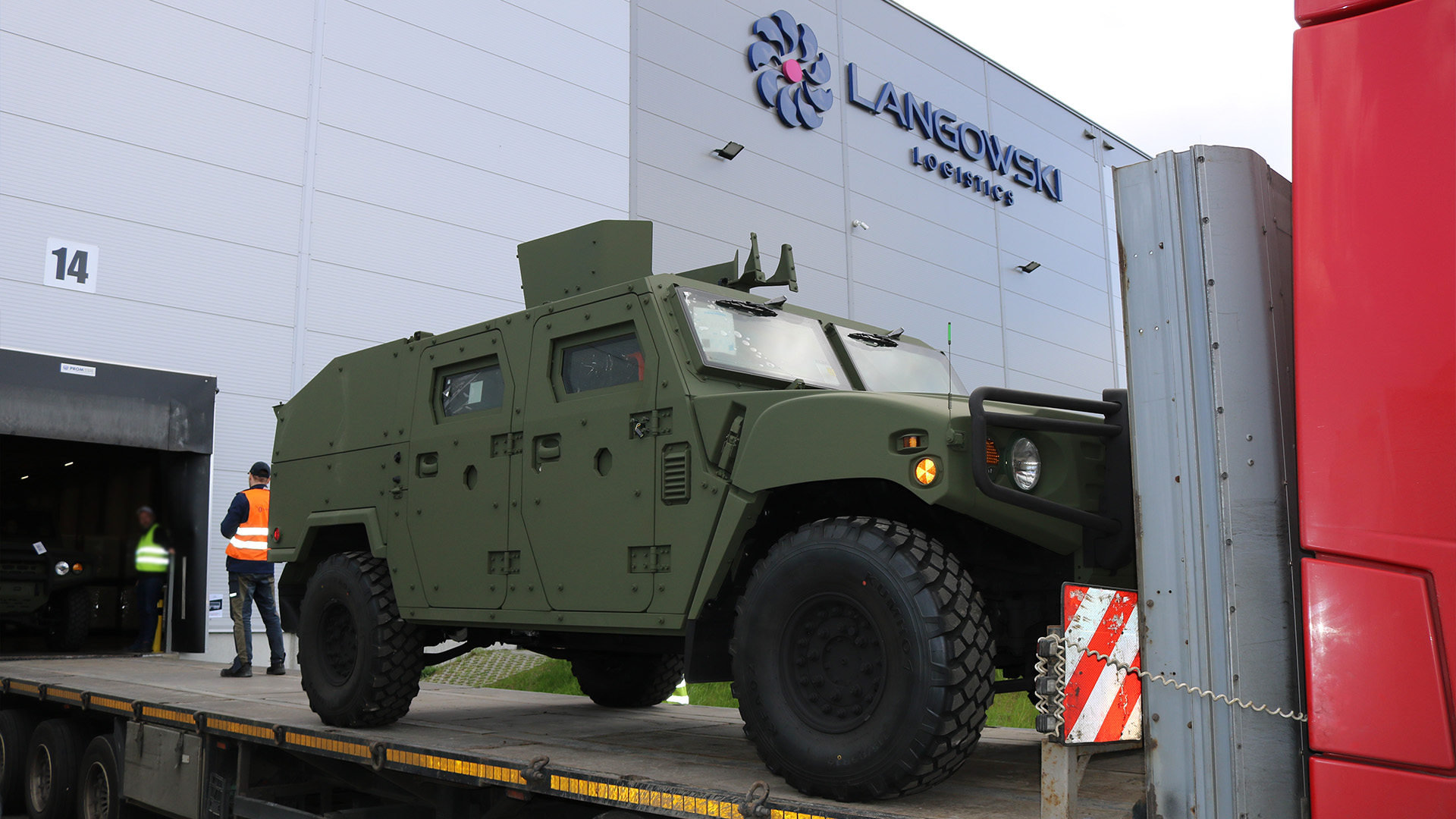
(Picture Credit: Langowski Logistics)
In addition to our growing military logistics, we have focused on investing in infrastructure by expanding our warehouse network. To gain greater control over the supply chain during volatile times, the company moved away from being a "pure" forwarder by investing heavily in its own infrastructure. At the moment, Langowski manages over 57,900 m² of warehouse space in crucial locations across Poland (Gdańsk, Gdynia, Pruszków, and Łódź). Our focus also includes digital infrastructure and regulatory compliance. Langowski Logistics treats technology as a tool for transparency, which is a critical client demand in 2026. We have also worked toward implementing an advanced operational platform that provides clients with real-time visibility and more efficient communication, along with E-invoicing (KSeF), which, as of 2026, is fully integrated with Poland’s National Invoicing System, outpacing many competitors in the digitalization of document workflows.
Finally, we continue to maintain a strong focus on rail and multimodal solutions as an alternative to maritime transport, which can be disruptive. Freight between China and Europe benefits from adopting a multimodal or rail approach, because sea freight can be too slow and air freight too expensive. Moreover, since we have an established branch in the USA, it gives us the independence to manage transatlantic trade independently, which is crucial given the evolving US customs and trade policies.
NSRN: Langowski has proven ample capabilities and carved a niche for itself in military cargo. Over the years, what are some of the nuances of military cargo that you have learned? Moreover, has the ongoing war in Ukraine impacted the industry?
Michał: Absolutely, having worked with military cargo and related logistics, there are several distinct nuances in how military freight differs from commercial cargo, and the war in Ukraine has had real, ongoing effects on the industry. There is a misconception that military cargo is just “big freight”, but that’s not true; it requires its own specialized systems and priorities. Classification and security are key factors. Often, military shipments contain sensitive, classified, or high-value items (weapon systems, spare parts, fuel) that require restricted access and armed escort, which is far beyond typical commercial cargo protocols.
Military cargo also prioritizes mission criticality, unlike mass-market goods. Supplies such as ammunition, components for combat vehicles, or medical gear can be rerouted or expedited on short notice due to operational needs, though often at a high cost. Keeping the transport flexible is central to military logistics, where disruptions are assumed. Routes, transport modes, and supply depots are designed with multiple redundant options so that if one node fails, another can be activated quickly, this is usually unlikely in standard logistics. Military cargo also requires integration with operational units because it does not simply move from A to B. Deliveries often must be synchronized with ground units, depots, and combat operations, requiring real-time coordination between logistics and end users. Plus, the weight classes, oversized or awkward packages (e.g., missiles, turrets, armored components) and hazard classifications of military cargo demand tailored handling equipment.
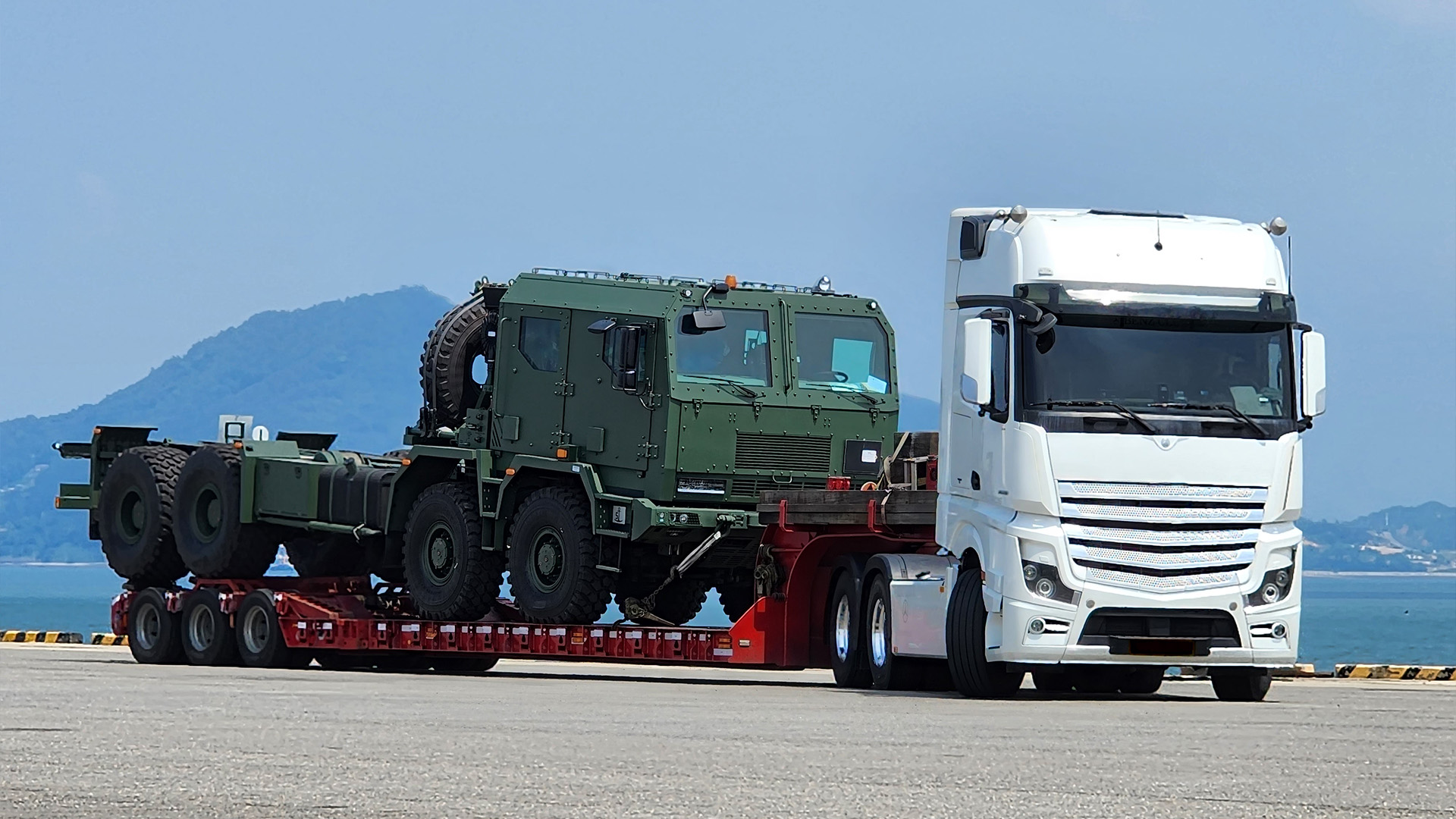
(Picture Credit: Langowski Logistics)
Coming to the ongoing war, yes, it has reshaped supply chains, transport patterns, and logistics risk globally. The war has closed and damaged key transport corridors, including the Ukrainian airspace and ports, forcing cargo (civilian and military) to re-route through hubs in EU countries, mainly Poland, increasing transit time and costs. Logistical complexity has also increased, with naval blockades in parts of the Black Sea and sanctions affecting Russian routes. Traditional freight corridors have become unreliable, boosting reliance on land and rail routes through Europe and increasing border processing times.
Some cargo segments, like humanitarian and medical shipments, have surged through hubs like Warsaw as air cargo routes avoid conflict zones. Military logistics have also been prioritized for direct transfer when routes and capacity allow. It’s also critical to note that Poland has undertaken large-scale military modernization and rearmament in response to the war in Ukraine, which has significantly increased demand for military cargo and logistics services. We also know that Poland isn’t just moving supplies to support Ukraine; it is rearming itself on an unprecedented scale, which has clear implications for transport, cargo handling, warehousing, and long-lead logistics across air, sea, and land.
NSRN: It’s been an interesting few years for rail logistics, with many ups and downs due to global events and geopolitical tensions. What is your most current assessment of the industry? And what do you think forwarders in Europe and beyond should bear in mind while working with rail?
Michał: Rail logistics in our company has been one of the most important parts for many years. From the beginning, we've been working to position Poland as a key player in this routing, offering comprehensive local logistics services, including warehouses, trucking, and customs, for westbound and eastbound shipments to clients across Europe. Over the past few years, we have faced numerous geopolitical situations beyond our control as freight forwarders, leaving us wondering whether the Belt and Road project has reached a standstill.
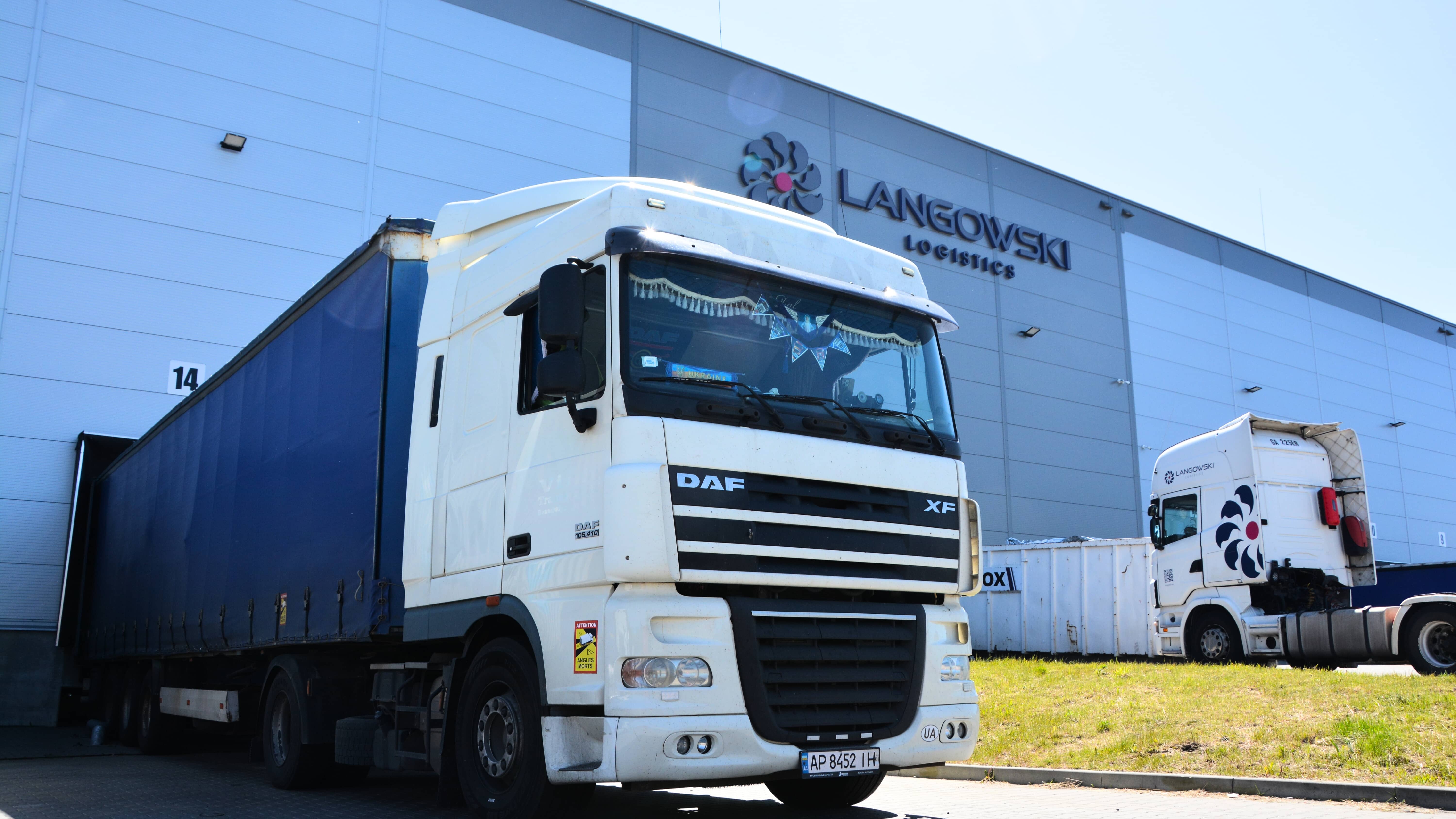
(Picture Credit: Langowski Logistics)
The first was the border closure between Poland and Belarus, and the second was the introduction of a sanctions list for certain types of cargo transiting into Russian territory. Due to its routing, this service will always depend on the current geopolitical situation, and anyone who uses it must keep this in mind. The introduction of sanctions clearly demonstrates that there are currently no significant alternatives to this route, and anyone who chooses to use it must consider disruptions. Despite all these difficulties, rail transport from China to Europe via Poland enjoyed significant customer interest last year, not only in Poland but also in neighboring countries such as the Czech Republic, Slovakia, and Romania.
If the political situation remains stable, growth can be expected in 2026 not only from China but also from Vietnam, Korea, and Japan. However, due to sanctions introduced by the European Union, transit through Belarus and Russia was restricted, partially shifting exports to Asian countries to Turkey and Georgia. From the perspective of the intermodal market in Poland, we also see a growing network of connections dedicated to 45HC containers and intermodal trailers across Europe. These connections now connect seaports to terminals and also support international trade within the European Union. In line with the European Union's current climate policy and the increasing burdens on road carriers, intermodal transport between EU countries should steadily increase its market share.
NSRN: With five warehouses in Poland, how does Langowski Logistics leverage its contract logistics and warehousing capabilities? Furthermore, what steps are taken maximise its facilities to improve transit times and operational efficiency in practice, especially given Poland's status as a busy logistics hub in Europe?
Michał: With our network of five modern Class A+ warehouses (located in Gdańsk, Gdynia, Łódź, and two in Pruszków near Warsaw), Langowski Logistics has evolved from a traditional freight forwarder into a comprehensive contract logistics operator. In 2026, their strategy focuses on leveraging Poland’s position as Europe's premier logistics hub to provide end-to-end solutions. We do this by utilizing the infrastructure and optimizing operations. Langowski Logistics goes beyond simple storage, treating its warehouses as active Value-Added Service (VAS) centers, and each of these caters to a specialized market. For example, our warehouses in Gdańsk & Gdynia are dedicated to maritime logistics due to their proximity to the Baltic Hub in Gdańsk and the BCT/GCT terminals. These sites focus on container stripping/stuffing (CFS), and the Gdynia warehouse can also handle oversized cargo in specialized storage yards. Moreover, in both these warehouses, we arrange the deconsolidation of our own ocean service from Shanghai and Shenzhen to Gdansk. Thanks to the ability to reload heavy cargo, we offer LCL shipments for heavy goods with non-standard dimensions.
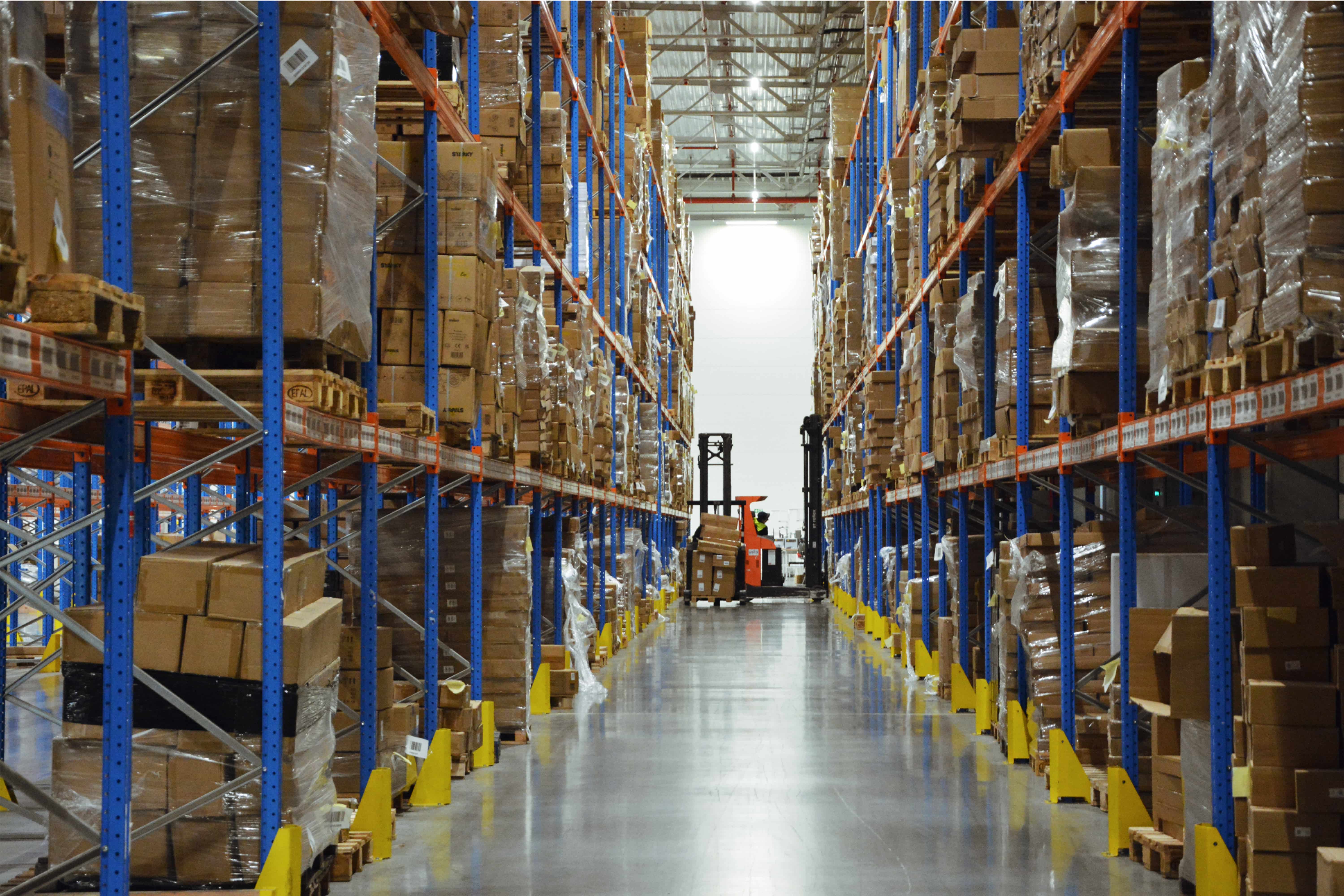
(Picture Credit: Langowski Logistics)
Our Lodz warehouse is dedicated partly to cargo that uses rail, that is, the Lodz-Chengdu/Chengdu-Lodz service, and it is located only one kilometer away from the Spedcontainer terminal. The demand here comes partly from clients from central areas of Poland who require a storage area with connections to Polish highway networks (A1/A2). The warehouses in Pruszków, called Warsaw I and Warsaw II, also have different capabilities. Warsaw I serves as the hub for the New Silk Road. This warehouse specializes in consolidating and deconsolidating cargo shipments between Asia and Europe. Weekly, we serve 20-25 containers from China, all via LCL shipments. As part of this project, we arrange weekly unloading services for 1-4 containers via a rail LCL service from South Korea. Warsaw I is also a hub for consolidating LTL groupage services. For example, our newest direction, which goes via our warehouse, is to Tbilisi, Georgia, from where we can arrange further transport to Asia. Equipped with a reach stacker or forklift with reloading possibilities up to 18 tons, we can reload almost all kinds of cargo. Then, Langowski Logistics’ latest and most strategic investment is the Warsaw II warehouse in Moszna-Parcela. Located within the modern MLP Pruszków II logistics park, this facility is designed to handle the surging demands of the e-commerce sector and high-velocity contract logistics, with a focus on e-commerce fulfillment and domestic distribution, serving the "last mile" in Poland’s most active consumer market.
To support all operations in all our warehouses, we provide an advanced Warehouse Management System (WMS) & Real-Time Control, allowing clients 24/7 remote visibility of stock levels. This integration minimizes production planning errors and inventory discrepancies. The warehouses function as bonded warehouses and temporary storage facilities. This allows clients to defer VAT and customs duties, significantly improving their cash flow. At Langowski Logistics, we continue to grow our capabilities not just as a forwarder but as an integral infrastructure provider, thus supporting the supply chain at key junctures.

.svg)
.svg)


